
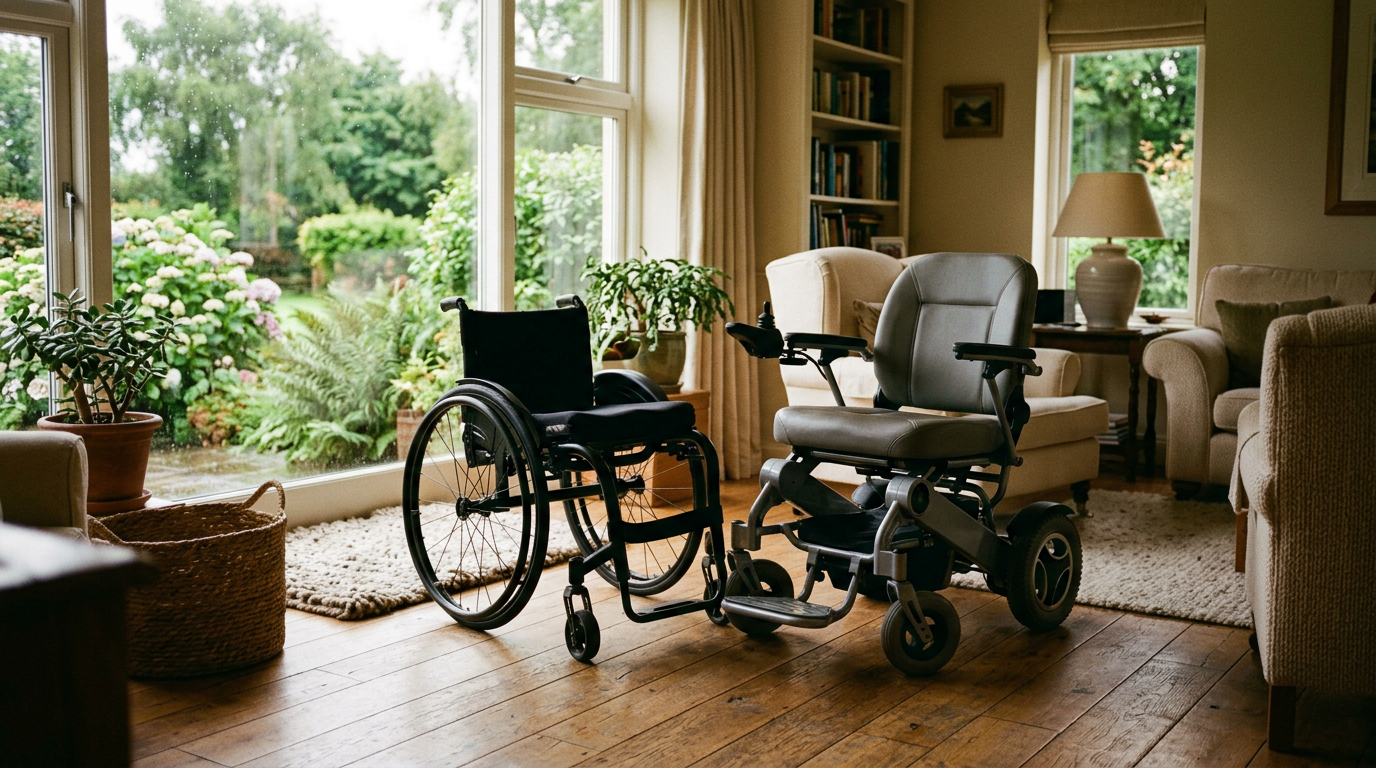
Choosing the right wheelchair is one of the most practical and personal decisions in the world of mobility aids. With so many options available — from lightweight folding manual chairs to sophisticated powered models with programmable controls — it can be genuinely difficult to know where to begin. Understanding the core differences between manual and powered wheelchairs is the single most important step you can take before making any purchase.
At elderlycareproducts.ie, we supply a carefully selected range of wheelchairs suited to a wide variety of everyday needs. Whether you are looking for something compact and easy to transport, or a powered model that provides greater independence across longer distances, this guide will walk you through everything you need to know about wheelchair types, their advantages, and the questions worth asking before you commit.
This post covers manual wheelchairs, powered (electric) wheelchairs, key differences in terms of weight, cost, terrain suitability, and maintenance — so you can make a confident, well-informed decision.
What Is a Manual Wheelchair?
A manual wheelchair is propelled either by the person seated in it, using their arms on the rear wheels, or by a carer or companion who pushes from behind using the handles. They have no motor or battery and rely entirely on human effort for movement.
Manual wheelchairs are the more traditional of the two types and remain by far the most widely used worldwide. Their simplicity is a genuine advantage — fewer components mean fewer things that can go wrong, and their lighter frames make them far easier to lift into a car boot or carry up a step.
Self-Propelled vs Transit (Attendant-Propelled) Manual Wheelchairs
Within the manual category, there is an important distinction to understand:
- Self-propelled wheelchairs feature large rear wheels with a push rim, allowing the seated person to drive themselves forward independently. These are ideal where the user has sufficient upper body strength and wishes to maintain as much independence as possible.
- Transit wheelchairs (also called attendant-propelled chairs) have smaller rear wheels and are designed to be pushed by a companion or carer. They are typically lighter and more compact, making them excellent for outings, travel, and short-distance use.
Key Advantages of Manual Wheelchairs
- Lightweight and easy to fold — most models weigh between 9 kg and 15 kg
- Simple to load into a car boot without specialist vehicle adaptations
- Lower purchase cost compared to powered alternatives
- No charging required — always ready to use
- Easier to maintain with widely available replacement parts
- Suitable for both indoor and outdoor use on smooth surfaces
Potential Limitations to Consider
- Self-propulsion requires adequate upper body strength and endurance
- Less suited to longer distances or uneven, hilly terrain
- Transit models depend on a carer being present for movement
If you are considering a manual option, browse our full wheelchair range at elderlycareproducts.ie to explore the models we currently have available.
What Is a Powered (Electric) Wheelchair?
A powered wheelchair — often called an electric wheelchair — is driven by a battery-powered motor controlled via a joystick or alternative input device. The user does not need to propel the chair manually; instead, directional control is managed electronically, typically with very small hand movements.
Powered wheelchairs offer a substantial increase in independence for those who find self-propulsion difficult or tiring. They are particularly well suited to people who need to cover longer distances, navigate a range of indoor and outdoor environments, or who have limited upper body strength or endurance.
Types of Powered Wheelchairs
The powered wheelchair category includes several sub-types:
- Standard electric wheelchairs: Robust chairs with a fixed or folding frame, suitable for daily indoor and outdoor use across a variety of surfaces.
- Folding electric wheelchairs: A newer category designed with portability in mind — lightweight aluminium or carbon frames that fold compactly for car travel, making them a practical middle ground between manual and full-sized powered chairs.
- Heavy-duty powered wheelchairs: Built for higher weight capacities and more demanding outdoor conditions, including rougher terrain and longer range requirements.
Key Advantages of Powered Wheelchairs
- Maximum independence — the user moves without physical exertion
- Ideal for longer distances and extended daily use
- Joystick controls require minimal physical effort to operate
- Increasingly available in lightweight, travel-friendly folding designs
- Consistent speed and smoother movement across varied surfaces
Potential Limitations to Consider
- Heavier than manual chairs — full-sized models can weigh 50 kg or more
- Require regular battery charging (typically overnight)
- Higher upfront purchase cost
- May require vehicle adaptations for transport
- More complex to service and repair
To explore our current electric wheelchair options, visit our electric wheelchairs collection at elderlycareproducts.ie.
Manual vs Powered: A Side-by-Side Comparison
To help clarify the decision, here is a straightforward comparison of the most important factors across both wheelchair types.
Weight and Portability
Manual wheelchairs have a significant advantage here. Lightweight transit chairs in particular can weigh as little as 9–10 kg, making them easy for a companion to fold and lift into a standard car. Folding electric wheelchairs have improved considerably and the best models now weigh in the 15–25 kg range — but standard powered chairs remain heavy and often require a vehicle ramp or hoist for transport.
Cost
Manual wheelchairs are considerably more affordable. Entry-level transit chairs typically start from a modest price point, while quality self-propelled models sit in the mid-range. Powered wheelchairs involve a higher initial investment due to the motor, battery system, and electronics involved. That said, for those who genuinely need powered mobility, the investment in independence and quality of daily life is significant.
Indoor vs Outdoor Use
Both types can be used indoors, though powered chairs require adequate doorway widths and turning space. Outdoors, manual chairs perform well on flat, smooth surfaces but can struggle with steep inclines or rough ground. Powered chairs — particularly those with larger rear wheels and suspension systems — handle a wider range of outdoor terrain more comfortably.
User Independence
A self-propelled manual chair offers good independence where upper body strength allows. A powered chair offers the highest level of independent movement, as it removes the need for physical effort entirely and does not rely on a carer being present to assist with propulsion.
Maintenance
Manual chairs are straightforward to maintain — tyres, cushions, and brakes are easy to check and replace. Powered chairs require battery management, periodic motor checks, and electronic servicing. In both cases, keeping the chair clean and regularly inspecting for wear is recommended.
How to Choose the Right Wheelchair Type
There is no universal answer to which wheelchair type is best — the right choice depends entirely on the individual's circumstances, environment, and daily routine. Here are some practical questions to help guide the decision:
Questions to Ask Before Buying
- How will the chair primarily be used? Primarily indoors in a home or care setting, or regularly used outside across varied terrain?
- Who will be operating the chair? Will the person seated drive themselves, or will a carer or companion be pushing?
- How will the chair be transported? Does it need to fit in a car boot regularly, or will it stay in one location?
- What distances are typically involved? Short trips around the home or garden, or longer outings and community access?
- Is there adequate space at home? Powered chairs require wider doorways and more turning radius indoors.
- What is the budget? Both upfront cost and ongoing maintenance should be factored in.
When a Manual Chair Is Likely the Better Fit
- The user or a companion has sufficient physical ability to propel or push the chair
- Portability and ease of car transport are high priorities
- The chair will be used for shorter, more occasional trips
- Budget is a primary consideration
When a Powered Chair Is Likely the Better Fit
- The user needs to move independently without relying on a companion
- Upper body strength or endurance makes self-propulsion impractical
- The chair will be used for longer periods throughout the day
- Greater outdoor range and varied terrain are regular requirements
For those who are undecided, our best-selling mobility products highlight the models that customers return to most consistently — a useful starting point when browsing.
Frequently Asked Questions About Wheelchair Types
What is the main difference between a manual and a powered wheelchair?
A manual wheelchair is propelled by the user's own arm strength or pushed by a companion, with no motor or battery involved. A powered wheelchair uses an electric motor and rechargeable battery, controlled by a joystick, allowing the user to drive independently without physical effort. The key differences come down to cost, weight, independence, and terrain capability.
Are powered wheelchairs suitable for use indoors?
Yes, most powered wheelchairs are designed for both indoor and outdoor use. However, it is important to check the chair's turning radius and overall width against your doorways and room layout before purchasing. Compact folding electric wheelchairs are generally better suited to tighter indoor spaces than larger standard-powered models.
How long does the battery last on an electric wheelchair?
Battery range varies depending on the model, terrain, user weight, and usage patterns. Most standard electric wheelchairs offer a range of between 15 and 25 kilometres on a full charge. Batteries are typically charged overnight using a standard plug socket. Always check the manufacturer's stated range before purchasing, and factor in that real-world range may be slightly lower than the quoted maximum.
Can I take an electric wheelchair on a plane or public transport?
Folding electric wheelchairs are generally more travel-friendly than fixed-frame models, but airline policies regarding lithium batteries vary. It is always essential to contact your airline or transport provider in advance to confirm their specific requirements for powered mobility aids. Manual wheelchairs are generally more straightforward for air travel.
Is a transit wheelchair the same as a standard manual wheelchair?
No — a transit wheelchair (sometimes called an attendant-propelled chair) has smaller rear wheels and is designed to be pushed by a companion rather than self-driven. A standard self-propelled manual wheelchair has large rear wheels with a push rim so the seated person can drive themselves. Both are manual, but they serve different purposes.
What should I check when buying a wheelchair in Ireland?
Key considerations include the weight capacity of the chair, the overall weight of the chair itself (especially for transport), seat width and depth for comfort, wheel type and suitability for your most common environments, folding mechanism if portability is needed, and whether spare parts and servicing are readily available. Buying from a reputable Irish supplier ensures you have local support if questions arise after purchase.
Choosing With Confidence
Understanding the difference between manual and powered wheelchairs is the foundation of making the right choice. Manual chairs offer simplicity, portability, and affordability — while powered chairs deliver independence, ease of use over longer distances, and reduced physical demand. Neither type is universally superior; the best wheelchair is the one that fits most naturally into the life of the person using it.
At elderlycareproducts.ie, we are committed to stocking quality, well-tested wheelchair options that support confident, independent movement in everyday Irish life. Whether you are starting your research or ready to purchase, explore our full wheelchair collection and find the model that suits your needs.