
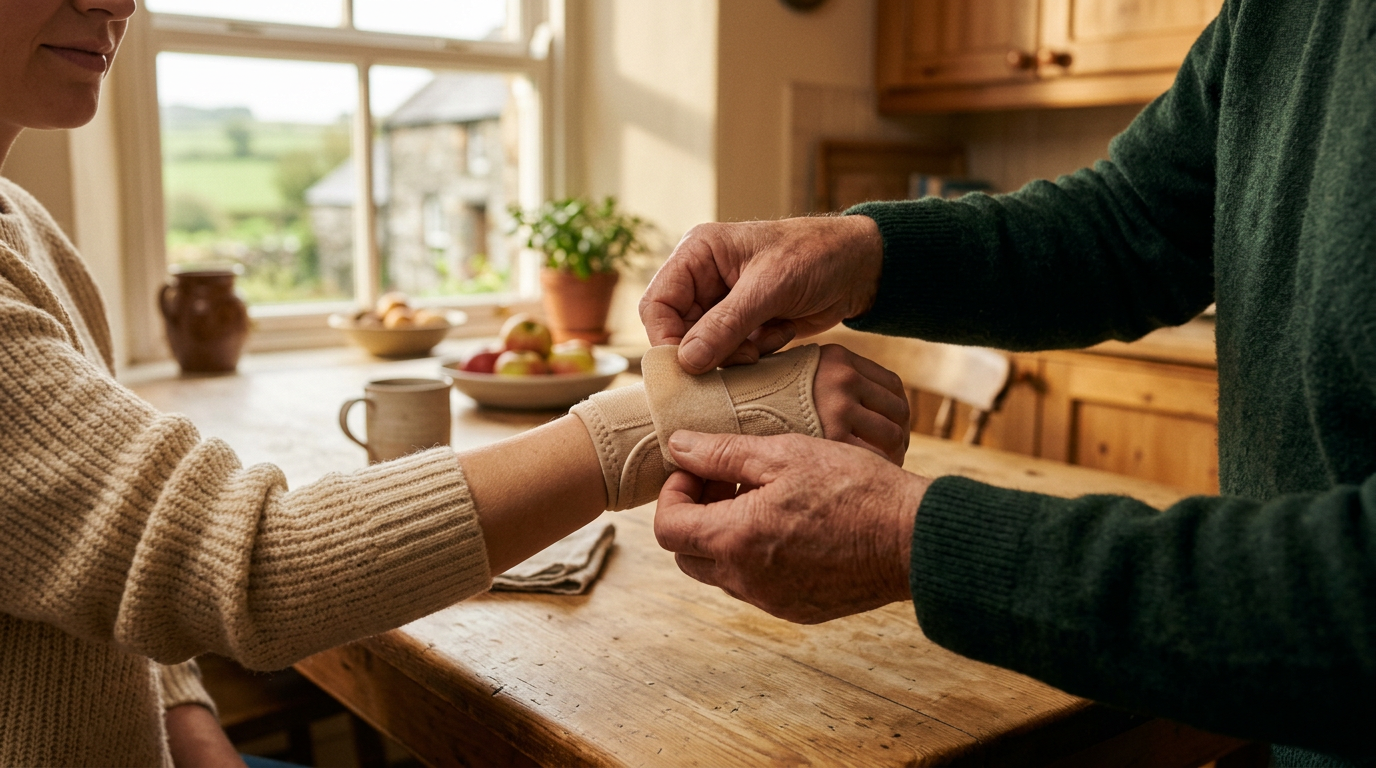
Joint supports are among the most practical and widely used aids for maintaining everyday comfort and confident movement. Whether you are returning to normal activity after a minor strain, managing the wear and tear that comes with an active life, or simply looking for extra stability during daily tasks, the right joint support can make a genuine difference to how you move and feel. Yet many people are unsure exactly how these products work, which type suits their needs, or when it makes sense to start using one.
At elderlycareproducts.ie, we stock a carefully chosen range of joint supports designed to provide reliable compression, warmth, and stability across the most commonly affected areas — including knees, wrists, ankles, elbows, and the lower back. In this guide, we explain the science behind joint supports, walk through the different types available, and help you understand when wearing one is likely to benefit you most.
Understanding how joint supports work is the first step to choosing the right one. Read on for a straightforward, practical overview that covers everything you need to know before making a purchase.
How Joint Supports Work: The Core Principles
Joint supports operate through a combination of mechanical and physiological effects. At their most fundamental level, they work by applying controlled pressure around a joint, which influences how the surrounding tissues behave during movement. The benefits are not simply about holding a joint in place — they extend to circulation, proprioception, warmth, and pain modulation.
Compression and Swelling Reduction
One of the most well-established functions of a joint support is graduated compression. By gently squeezing the soft tissues around a joint, a support helps to limit the build-up of excess fluid in the area. This is particularly relevant after a minor sprain or during periods of prolonged activity, when the body's natural inflammatory response can lead to puffiness and discomfort. The compression does not eliminate this response — which serves a useful biological purpose — but it can keep swelling within a more manageable range and reduce associated discomfort.
Proprioception and Movement Awareness
Proprioception refers to the body's ability to sense its own position and movement in space. The nerve endings in skin, muscles, and tendons constantly relay information to the brain about joint angles, load, and movement speed. When a joint has been strained or is under stress, this feedback system can become less reliable, increasing the risk of awkward movements or further minor injury.
A well-fitted joint support provides constant tactile input to the skin and underlying tissues. This heightened sensory feedback helps the brain maintain better awareness of the joint's position during activity, which in turn supports more controlled, confident movement. Many users report that wearing a knee or ankle support makes them feel noticeably more sure-footed — and this is precisely why.
Warmth and Tissue Readiness
Many joint supports are made from neoprene or thermal fabrics that retain body heat around the joint. Warmth encourages blood flow to the area, which can help keep muscles and tendons more pliable and responsive during activity. This is particularly useful first thing in the morning or during colder months, when joints can feel stiffer before they have had time to warm up naturally through movement.
Mechanical Stabilisation
Some joint supports — particularly those designed for the knee or ankle — incorporate rigid or semi-rigid stays, straps, or hinged components. These provide a degree of direct mechanical stabilisation, limiting excessive movement in specific directions. This is distinct from the softer compression models and is typically used where there is a greater need to restrict range of motion during recovery or demanding activity.
Types of Joint Supports and What They Are Designed For
Not all joint supports are the same. The construction, material, and design of a support determines both the level of support it provides and the type of use it is best suited to. Understanding the main categories will help you identify the most appropriate option for your situation.
Sleeve-Style Compression Supports
These are the most common type, typically made from elasticated fabric such as neoprene, knitted polyester, or a blend incorporating spandex. They slip on over the limb and provide uniform compression across the joint. Sleeve supports are well suited to everyday use, mild instability, and general comfort during walking, gardening, or light physical activity. They are available for knees, ankles, wrists, and elbows.
Wraparound and Adjustable Supports
Wraparound supports use hook-and-loop (Velcro-style) fastenings to allow a more customised fit and targeted compression. They are easier to put on and remove than pull-on sleeves, making them a practical choice where dexterity is limited. They can often be adjusted during the day to account for changes in swelling or activity level. Many users find a wraparound knee support particularly useful because the fit can be fine-tuned to feel firm without being restrictive.
Hinged and Rigid Supports
These supports include metal or plastic stays running alongside the joint, sometimes with a hinged mechanism that allows controlled flexion and extension. They offer the highest level of mechanical stabilisation and are typically recommended during recovery from more significant ligament strains or where there is a clinical need to limit lateral movement. They are less suited to all-day wear for general activity but can be invaluable during specific tasks that place greater demand on the joint.
Back and Lumbar Supports
Lumbar and lower back supports work on similar principles to limb supports but are designed to address the complex mechanics of the spine and pelvis. A well-fitted back support provides gentle compression and warmth to the lower back musculature, encourages a more upright posture, and reduces the strain placed on the lumbar vertebrae during bending, lifting, or prolonged standing. They are particularly widely used among those who spend long periods on their feet or are returning to light activity following a period of lower back discomfort.
If you are exploring options for knee, wrist, ankle, or back support, you can browse the full joint supports range at elderlycareproducts.ie to compare styles and specifications.
When to Use a Joint Support
Knowing when to use a joint support is just as important as knowing which type to choose. Using a support appropriately can contribute meaningfully to comfort and function; using one unnecessarily or in the wrong context can occasionally be counterproductive. Here are the most common and well-supported situations in which wearing a joint support is beneficial.
During Recovery from Minor Strains and Sprains
Minor sprains — particularly to the ankle and wrist — are among the most frequent soft-tissue injuries encountered in everyday life. In the days and weeks following a sprain, the affected ligaments are healing and the joint may feel unstable or uncomfortable. A compression support worn during this period helps manage swelling, provides proprioceptive feedback to reduce the risk of re-injury, and allows the person to remain more active during recovery. It is important to note that more significant injuries should always be assessed by a medical professional before self-managing with a support.
During Physical Activity or Demanding Tasks
Many people find joint supports useful as a preventative measure during activities that place greater than usual demand on specific joints — such as walking longer distances, gardening, DIY tasks, or carrying shopping. Wearing a knee or ankle support during these activities can reduce fatigue in the surrounding muscles and help maintain stable, confident movement throughout. This is not about compensating for weakness but about working smarter and protecting joints during periods of heightened load.
For Everyday Comfort and Stability
Joint supports are not only for acute injuries or intense activity. Many people wear them throughout the day as part of their everyday routine to maintain a comfortable level of support during normal tasks. A wrist support worn while typing or cooking, or a knee sleeve worn during a daily walk, can reduce discomfort and help sustain regular activity with greater ease. The key is that the support complements natural movement rather than replacing it.
When Joint Stiffness Is More Noticeable
Joints can feel considerably stiffer in cold or damp weather, first thing in the morning, or after a period of sitting still. A thermal joint support helps to retain heat around the area, encouraging circulation and tissue pliability. Many users find that wearing a support during the first hour or two of the day, until the joint has had time to warm up through movement, makes a noticeable difference to their morning routine.
Post-Surgical or Following Medical Advice
In some cases, a healthcare professional may recommend wearing a specific type of joint support as part of a structured rehabilitation plan following surgery or a more significant injury. In these instances, always follow the professional's guidance regarding which type to use, how long to wear it, and any precautions that apply. A joint support is a complement to — not a replacement for — professional clinical guidance.
Choosing the Right Joint Support: Practical Considerations
With a broad range of styles, materials, and sizes available, selecting the right joint support requires a little thought. The following considerations will help you make a well-informed choice.
Get the Right Fit
Fit is the single most important factor in how well a joint support performs. A support that is too loose will not provide adequate compression or stability, while one that is too tight can restrict circulation and cause discomfort. Most supports are sized according to circumference measurements taken at the joint or just above and below it. Always refer to the manufacturer's sizing guide and, when in doubt, measure carefully before purchasing.
Consider the Level of Support Required
Think honestly about the type and intensity of activity you will be undertaking whilst wearing the support. For light, everyday activity, a standard compression sleeve is likely sufficient. For more demanding activity or where there is a history of joint instability, a reinforced or wraparound model with additional stays or straps may be more appropriate. Matching the level of support to the level of demand is important for both comfort and effectiveness.
Material and Wearability
If you plan to wear a joint support for extended periods, comfort against the skin matters. Neoprene is highly effective at retaining warmth but can feel warm in summer months. Knitted and breathable fabrics are better suited to all-day wear or warmer conditions. Consider whether the support needs to fit discreetly under clothing, and whether you will need to put it on and remove it independently — in which case, a wraparound or adjustable design may be preferable to a pull-on sleeve.
Our joint supports collection includes options from trusted suppliers with a strong track record in quality and durability, with delivery across Ireland from our Limerick-based fulfilment partner.
Frequently Asked Questions About Joint Supports
How long should I wear a joint support each day?
There is no single universal answer, as it depends on the reason for use and the type of support. For general comfort during activity, wearing a support only when needed — during exercise or demanding tasks — is a sensible approach. For recovery from a minor strain, wearing it throughout waking hours for the first few days is common. Extended continuous wear overnight is generally not recommended unless specifically advised by a healthcare professional, as the joint benefits from periods of unrestricted movement.
Will wearing a joint support make my joint weaker over time?
This is a frequently raised concern, but for most people using a standard compression support appropriately, it is not a significant risk. Compression sleeves do not immobilise the joint or prevent the surrounding muscles from working. The concern is more relevant to rigid or highly restrictive supports worn for prolonged periods without any rehabilitation exercise. If you are recovering from an injury, complement support use with appropriate movement and, where recommended, physiotherapy exercises.
Can I wear a joint support under clothing?
Yes. Most sleeve-style and wraparound supports are slim enough to wear under trousers, leggings, or a shirt without being noticeable. Neoprene supports tend to be slightly bulkier than knitted alternatives, so if discreet wear under clothing is important to you, opt for a breathable knitted support in a neutral colour.
How do I know if I need a left or right support?
Some joint supports — particularly for the knee and ankle — are designed for either the left or right side and are shaped accordingly. Others are non-handed and can be worn on either side. Always check the product description carefully. If you are purchasing for a specific joint on a specific side, confirm that the product is suitable before ordering.
Are joint supports suitable for use after surgery?
This depends entirely on the type of surgery and the stage of recovery. Some post-surgical rehabilitation plans do incorporate specific supports as part of a structured programme, but others may advise against it. Always follow the guidance of your surgeon, GP, or physiotherapist regarding use of supports following a surgical procedure. Do not self-prescribe a support in place of professional clinical advice after surgery.
How do I clean a joint support?
Most joint supports can be hand-washed in lukewarm water with a mild detergent, then left to air dry flat away from direct heat. Machine washing is possible for some models, but always check the care label first, as high temperatures or tumble drying can damage elastic fibres and neoprene, reducing the support's effectiveness over time. Regular washing — particularly for supports worn daily — keeps the material hygienic and helps maintain the elasticity of the fabric.
Conclusion
Joint supports are a straightforward, effective, and accessible way to maintain comfort, stability, and confidence during everyday activity. By understanding how they work — through compression, warmth, proprioceptive feedback, and where necessary, mechanical stabilisation — you can make a genuinely informed decision about whether one is right for you and which type will serve you best. Whether you are managing the aftermath of a minor sprain, seeking greater assurance during a daily walk, or simply wanting to feel more supported during physical tasks, the right joint support, worn correctly and sized accurately, can be a valuable part of your everyday routine.
At elderlycareproducts.ie, we are here to help you find the right solution with confidence. Explore our full range of joint supports and find the right fit for your needs, with straightforward product descriptions and reliable delivery across the Republic of Ireland.