
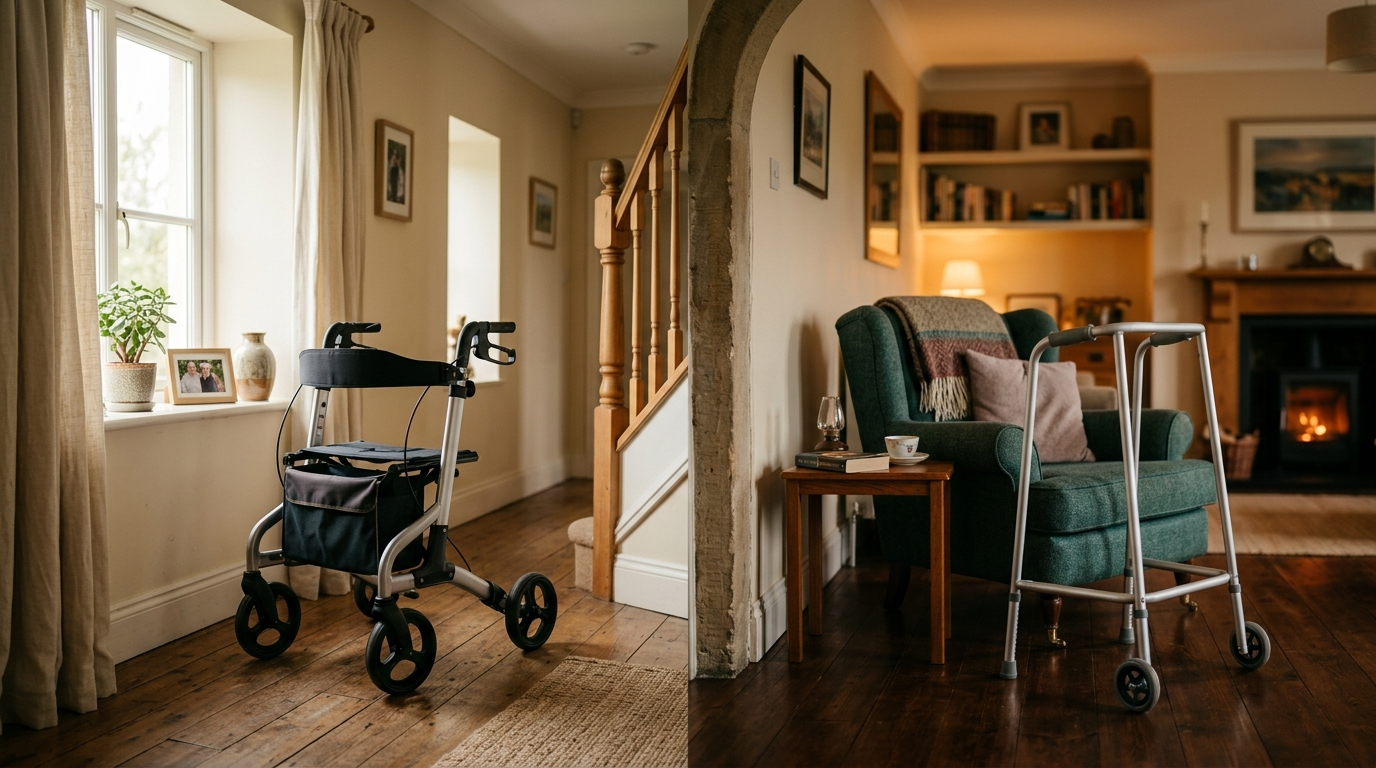
Choosing the right mobility aid can make a genuine difference to daily confidence, comfort, and independence. Two of the most popular options available today are rollators and standard walking frames — and while both provide meaningful support during everyday movement, they work in quite different ways. Understanding those differences is the first step towards finding the option that fits your lifestyle best.
At elderlycareproducts.ie, we are frequently asked: which is better — a rollator or a walking frame? The honest answer is that it depends on the individual, the environment, and the level of support required. This guide breaks down everything you need to know, from how each aid works to the specific situations where one clearly outperforms the other.
Whether you are exploring options for the first time or reconsidering a current aid that no longer feels right, this comparison will help you make an informed, confident decision.
What Is a Walking Frame and How Does It Work?
A standard walking frame — sometimes called a Zimmer frame — is a rigid, four-legged metal structure with no wheels. To use one, you lift the frame slightly, move it forward, and then step towards it. This lift-and-step motion provides a firm, stable base with each step, making it one of the most secure options available for those who need significant weight-bearing support.
Key Features of a Standard Walking Frame
- Four non-wheeled legs with rubber ferrules that grip the floor securely
- Lightweight aluminium construction, typically foldable for easy storage
- Adjustable height to accommodate different users
- No moving parts — simple to operate without any mechanical knowledge
- Low cost compared to most rollators
Where Walking Frames Excel
Walking frames are particularly effective in confined indoor spaces such as small hallways, hospital wards, or bathrooms where manoeuvring room is limited. Because there are no wheels, there is no risk of the frame rolling away unexpectedly, which makes them a reassuring choice for those who are earlier in their recovery or who require maximum stability at each step. They are also extremely easy to clean and maintain, with virtually no components that can wear out or require adjustment.
What Is a Rollator and How Does It Differ?
A rollator is a wheeled walking aid — typically fitted with three or four wheels — that you push forward rather than lift. Most rollators also feature a built-in padded seat, a storage bag or basket underneath, and hand-operated brakes. This combination of mobility and rest capability makes them a highly versatile choice for everyday use both indoors and outdoors.
Key Features of a Rollator
- Three or four wheels for smooth, continuous forward movement
- Loop or trigger hand brakes to control speed and lock the frame when seated
- Padded fold-down seat — ideal for pausing to rest during longer outings
- Under-seat storage bag or basket for carrying everyday essentials
- Larger outdoor wheels on many models for use on varied terrain
- Adjustable handle height and, on premium models, adjustable backrest
Where Rollators Excel
Rollators come into their own for people who are active and mobile but benefit from a stable support structure during longer walks, shopping trips, or social outings. Because the wheels move continuously, there is no need to lift the frame at each step — this significantly reduces upper-body effort and fatigue over time. The built-in seat adds an important layer of independence, allowing users to rest whenever and wherever they need to without searching for a bench or chair.
If outdoor use is a priority, a rollator is almost always the stronger choice. Models from our rollator and frames collection include designs from Timago, engineered for durability across a range of surfaces.
Rollators vs Walking Frames: A Direct Comparison
Now that we understand each aid individually, it helps to place them side by side across the criteria that matter most when choosing a mobility aid.
Stability and Weight Support
Walking frames offer superior stability for those who need to place significant downward weight on their aid with each step. Because all four legs are stationary and in contact with the floor simultaneously, the frame creates a locked, reliable platform. Rollators, while stable, are designed for users who can bear most of their own weight and primarily need the aid for balance and endurance support rather than full weight-bearing assistance.
Verdict: Walking frames for maximum weight-bearing support. Rollators for balance support with greater mobility.
Ease of Movement and Energy Expenditure
The continuous wheeled movement of a rollator requires considerably less energy than the repetitive lift-and-step cycle of a walking frame. For those covering longer distances — whether around a supermarket, through a park, or along a corridor — rollators allow a more natural gait pattern and reduce the physical demand on arms, shoulders, and wrists.
Verdict: Rollators win clearly for ease of movement over distance.
Indoor vs Outdoor Use
Standard walking frames are best suited to indoor environments with smooth, flat floors. They can be used outdoors on very even surfaces, but kerbs, gravel, or uneven ground present significant challenges. Rollators — particularly those with larger rear wheels — handle outdoor terrain far more confidently and are the preferred choice for anyone who wants to remain active outside the home.
Verdict: Rollators for outdoor versatility. Walking frames for controlled indoor environments.
Portability and Storage
Both aids are designed to fold flat for storage or transport. Standard walking frames are exceptionally lightweight and fold down to a very compact size, making them easy to place in a car boot or store in a small cupboard. Rollators are slightly heavier due to their wheels, brakes, and seat mechanisms — though many modern models, such as those in our byACRE premium range, use carbon fibre or lightweight aluminium to keep weight to a minimum.
Verdict: Walking frames for ultra-lightweight portability. Rollators for those who can manage a modest additional weight in exchange for greater functionality.
Rest Capability
This is one of the clearest differentiators. Rollators include a built-in fold-down seat, meaning users can pause to rest at any point during a walk without needing to find external seating. Walking frames offer no seating capability whatsoever. For anyone who tires during longer outings or who values the security of knowing they can sit down at any moment, this feature alone can be decisive.
Verdict: Rollators win outright on rest capability.
Cost
Standard walking frames are among the most affordable mobility aids available. A quality folding frame typically costs a fraction of the price of a mid-range rollator. However, the additional features of a rollator — wheels, brakes, seat, storage — represent genuine functional value, and many users find the investment worthwhile when weighed against the benefits in daily comfort and independence.
Verdict: Walking frames are the more budget-friendly option. Rollators offer greater long-term value for active users.
Which Should You Choose? A Practical Decision Guide
Rather than declaring one option universally superior, the right choice depends on how and where the aid will be used, and the level of support genuinely required. The following guidance covers the most common scenarios.
Consider a Walking Frame If:
- You need substantial weight-bearing support at every step
- You are recovering from surgery or injury and are in an early stage of rehabilitation
- You primarily move within a small indoor space such as a flat or hospital ward
- Simplicity and ease of use are the top priorities
- Budget is a primary consideration
Consider a Rollator If:
- You are steady on your feet but benefit from balance support and something to lean on
- You want to remain active outdoors — shopping, walking, or socialising
- Fatigue during longer distances is a concern and the ability to sit down would be valuable
- You carry shopping, medication, or personal items and need convenient storage
- You want a more natural walking gait without the interruption of lifting a frame
A Note on Transitioning Between Aids
It is worth noting that many people begin with a walking frame following a hospital discharge or period of reduced mobility, and later transition to a rollator as their strength and confidence increases. This progression is entirely natural, and having the right aid for each phase is more important than committing permanently to one type. Our team at elderlycareproducts.ie is always happy to help you consider which stage you are at and which aid aligns with your current needs.
Browse our full rollators and walking frames collection to compare models, specifications, and pricing side by side.
Frequently Asked Questions
Is a rollator safer than a walking frame?
Neither is inherently safer — it depends on the level of support needed. Walking frames are safer for those who require significant weight-bearing support because they remain stationary at each step. Rollators are safer for active, mobile users because they encourage a more natural gait and reduce the risk of fatigue-related stumbles over longer distances. Choosing the correct aid for the correct level of need is the most important safety consideration.
Can a rollator be used indoors?
Yes, most rollators are well suited to indoor use. Smaller-wheeled models with a compact frame width are particularly practical in home environments. The brakes allow users to lock the rollator in place when standing still, providing a stable support point. However, very tight spaces — such as narrow bathrooms — may suit a standard walking frame better due to its smaller footprint.
What is the weight limit on a typical rollator?
Most standard rollators have a weight capacity of between 100 kg and 136 kg, though heavy-duty models are available for higher weight requirements. Walking frames tend to have similar or slightly higher weight capacities depending on the model. Always check the specific product specifications before purchasing to ensure the aid is suitable.
Do I need a prescription to buy a rollator or walking frame in Ireland?
No prescription is required to purchase a rollator or walking frame in Ireland. Both are available to buy directly from elderlycareproducts.ie without a referral. However, if you are unsure which type of aid is most appropriate for your specific situation, it is always worth speaking with a physiotherapist or occupational therapist for professional guidance.
Are rollators suitable for outdoor use on uneven ground?
Many rollators are designed with outdoor use in mind, featuring larger rear wheels and sturdy frames that handle pavements, slight inclines, and uneven surfaces well. If outdoor terrain is a primary consideration, look for models with wheels of at least 20 cm in diameter and a robust braking system. Standard walking frames are not recommended for use on uneven outdoor ground.
Can rollators and walking frames be adjusted for different heights?
Yes, both rollators and standard walking frames feature adjustable handle heights to accommodate a wide range of users. As a general rule, handles should be set at approximately wrist height when standing upright with arms relaxed at your sides. Correct handle height is important for both comfort and postural support during use.
Conclusion
Both rollators and walking frames have a genuine and important role in supporting confident, independent movement — and neither is the universally "better" option. The right choice comes down to the level of support required, the environments where the aid will be used, and the lifestyle of the individual using it. Walking frames offer unmatched simplicity and stability for those who need maximum support in controlled indoor settings. Rollators deliver freedom, versatility, and comfort for those who want to stay active across a wider range of daily activities.
At elderlycareproducts.ie, we stock a carefully selected range of both rollators and walking frames to suit a variety of needs and budgets, with models available from trusted suppliers including Timago. Whether you are just beginning your search or looking to upgrade an existing aid, our team is here to help. Explore our full rollators and frames collection and find the right support for confident, everyday movement.