
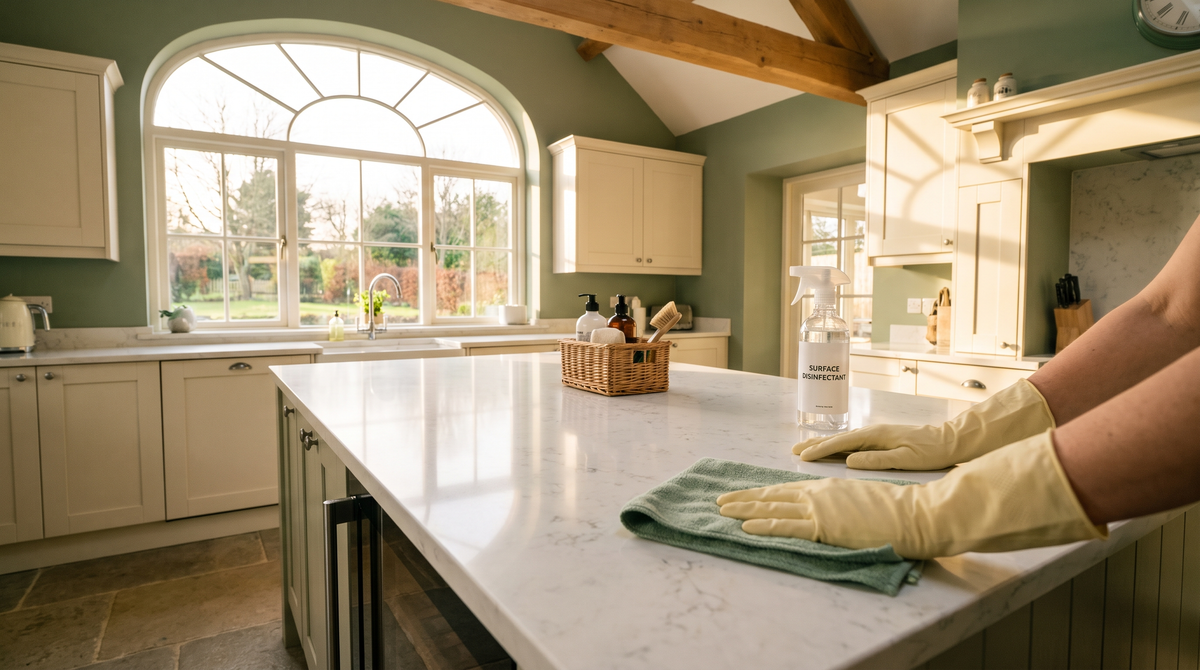
Keeping the surfaces in your home clean and properly disinfected is one of the most effective ways to reduce the spread of germs, bacteria, and viruses. Whether you are maintaining a busy family household, supporting a loved one at home, or simply want to create a safer, more hygienic living environment, understanding the difference between cleaning and disinfecting — and knowing when to use each — makes a genuine difference to the health of everyone in the home.
This practical guide from elderlycareproducts.ie walks you through everything you need to know about surface cleaning and disinfection: the key terminology, the most important surfaces to focus on, the right products and methods to use, and how to build a routine that is both manageable and effective. Whether you are new to structured home hygiene or simply looking to sharpen your approach, there is something here for every household.
Surface cleaning and disinfection does not have to be complicated or time-consuming. With the right knowledge and a few quality products, it becomes a natural part of everyday home care — giving you confidence that the spaces you live in are as safe and clean as they can be.
Understanding the Difference Between Cleaning, Sanitising, and Disinfecting
These three terms are often used interchangeably, but they describe distinct processes with different purposes. Knowing the difference allows you to choose the right approach for each situation in the home.
Cleaning
Cleaning refers to the physical removal of dirt, dust, grease, and debris from a surface. This is typically done using a cloth, sponge, or mop combined with water and a general-purpose cleaner or detergent. Cleaning does not kill germs, but it does remove them physically from the surface, reducing their numbers and preparing the surface for further treatment if needed.
Sanitising
Sanitising reduces the number of germs on a surface to a safe level as defined by public health standards. It is generally less intensive than full disinfection and is commonly used in food preparation areas where reducing bacterial contamination is the primary goal. Many kitchen sprays and food-safe surface cleaners fall into this category.
Disinfecting
Disinfecting uses chemical agents — such as bleach solutions, alcohol-based products, or quaternary ammonium compounds — to kill the majority of bacteria, viruses, and other pathogens on a surface. Disinfection is most important in bathrooms, toilet areas, and any surface that has come into contact with bodily fluids or illness. It is worth noting that disinfection is most effective when the surface has been cleaned first, as heavy soiling can reduce the efficacy of disinfectant products.
For most households, a two-step approach — clean first, then disinfect — offers the best protection in high-risk areas, while routine cleaning alone is sufficient for lower-risk surfaces such as windowsills or bookshelves.
High-Priority Surfaces in the Home
Not every surface in the home carries the same level of risk. Focusing your disinfection efforts on the areas most likely to harbour and transfer pathogens allows you to work efficiently without turning every cleaning session into an exhausting undertaking.
Kitchen Surfaces
The kitchen is one of the most important areas to keep clean in any home. Countertops, cutting boards, sink basins, tap handles, appliance handles (fridge, microwave, oven), and the inside of the sink are all high-touch, high-risk surfaces. Food preparation areas are particularly vulnerable to bacterial contamination from raw meat, unwashed vegetables, and cross-contamination via hands and utensils. Clean and sanitise these surfaces before and after food preparation as a minimum.
Bathroom Surfaces
Bathrooms are naturally humid environments that support the growth of bacteria, mould, and mildew. The toilet seat, lid, handle, and surrounding areas require regular disinfection. Tap handles, door handles, light switches, the sink basin, and soap dispensers are among the most frequently touched — and frequently overlooked — surfaces. Shower trays and bath surrounds benefit from regular cleaning with a suitable mould-inhibiting product.
High-Touch Points Throughout the Home
Beyond the kitchen and bathroom, many surfaces throughout the home are touched dozens of times a day by multiple people. These include:
- Door handles and knobs on internal and external doors
- Light switches in all rooms
- Remote controls and shared electronic devices
- Telephone handsets and mobile phones
- Stair handrails and bannisters
- Chair armrests and furniture handles
- Shared tables and desk surfaces
During periods of illness in the household, these surfaces should be disinfected at least once daily. Under normal circumstances, including them in a weekly cleaning routine is a sound practice.
Mobility and Support Aids
In homes where mobility aids, bathroom support rails, raised toilet seats, or shower chairs are in regular use, these items require consistent cleaning and disinfection as part of the household hygiene routine. Handles and grip points on walking frames, handrails, and commode armrests can harbour germs just as readily as any other frequently touched surface. Using a mild disinfectant spray or wipe on these items regularly is both practical and important for hygiene.
Choosing the Right Cleaning and Disinfection Products
The range of surface cleaning and disinfection products on the market can feel overwhelming, but understanding what to look for simplifies the selection process considerably.
General-Purpose Surface Cleaners
A good general-purpose surface cleaner is the foundation of any home cleaning routine. These products are designed to cut through grease, remove dirt, and leave surfaces clean. They are suitable for most kitchen and bathroom surfaces and can typically be used on worktops, tiles, sinks, and appliances. Always check the label to confirm compatibility with the surface you are cleaning.
Disinfectant Sprays
Disinfectant sprays are one of the most convenient and widely used disinfection tools in the home. They are sprayed directly onto a surface, left for a contact time specified on the product label (often between 30 seconds and 5 minutes), and then wiped away. The contact time is critical — wiping a disinfectant away immediately after application significantly reduces its effectiveness. Look for products with proven efficacy against common household bacteria and viruses.
Bleach-Based Solutions
Diluted household bleach (sodium hypochlorite) is one of the most effective disinfectants available and is suitable for toilets, drains, bins, and heavily soiled non-porous surfaces. It should always be diluted according to the manufacturer's instructions — typically 1 part bleach to 49 parts water for general surface disinfection — and should never be mixed with other cleaning products, particularly ammonia-based cleaners, as this produces harmful gases. Bleach is not suitable for use on fabrics, carpets, or many painted surfaces.
Alcohol-Based Products
Products containing 70% isopropyl or ethyl alcohol are effective against a broad range of bacteria and viruses and are particularly useful for disinfecting electronics, touch screens, and other items that cannot be wiped with liquid sprays. Alcohol evaporates quickly and leaves no residue, making it ideal for sensitive surfaces.
Disinfectant Wipes
Pre-moistened disinfectant wipes combine the cleaning and disinfecting steps into one convenient action and are excellent for quick, targeted disinfection of high-touch surfaces throughout the day. They are particularly useful for door handles, remote controls, and mobility aid handles where speed and convenience matter most.
You can explore our full range of surface cleaning and disinfection products at elderlycareproducts.ie: Browse Surface Cleaning & Disinfection products.
Building a Practical Surface Cleaning and Disinfection Routine
Consistency is the key to effective home hygiene. A structured routine — broken down by daily, weekly, and monthly tasks — makes the process manageable and ensures that no important surface is overlooked for long periods.
Daily Tasks
- Clean and sanitise kitchen countertops and the sink basin after use
- Wipe down the hob and any surfaces that have come into contact with food
- Disinfect the toilet seat, handle, and surrounding area
- Wipe high-touch points (door handles, light switches) if anyone in the household is unwell
Weekly Tasks
- Deep clean bathroom surfaces including the sink, shower, and bath
- Disinfect all high-touch points throughout the home as a routine precaution
- Clean and disinfect mobility aids, support rails, and grab handles
- Wipe down shared furniture surfaces including tables, armrests, and shelving
- Clean and disinfect bins and waste disposal areas
Monthly Tasks
- Clean inside kitchen appliances including the microwave and fridge
- Descale taps and shower heads to prevent build-up of limescale
- Treat any visible mould or mildew in the bathroom or kitchen
- Review and replenish your cleaning supplies to ensure you always have essential products on hand
For households where thorough cleaning is important but physical effort is a consideration, choosing the right tools — lightweight mops, long-handled brushes, easy-grip spray bottles — makes the routine far more achievable. Browse our Mops, Brushes & Cleaning Tools collection for practical options designed with everyday use in mind.
Safety Considerations When Using Disinfectant Products
While surface disinfection is essential for household hygiene, it is equally important to use cleaning products safely to protect everyone in the home.
Ventilation
Always ensure good ventilation when using disinfectant sprays or bleach-based products. Open windows and doors to allow fresh air to circulate, particularly in enclosed spaces such as bathrooms. Inhaling concentrated cleaning product fumes can cause respiratory irritation, headaches, and discomfort.
Protective Gloves
Wearing rubber or disposable gloves when cleaning and disinfecting protects the skin from prolonged contact with chemical cleaning agents. Many disinfectants, particularly bleach-based products, can cause skin dryness and irritation with repeated exposure. Gloves also provide a practical hygiene barrier when cleaning toilets and waste areas.
Product Compatibility
Never mix different cleaning products together unless specifically directed to do so by the manufacturer. Mixing bleach with ammonia, for example, releases toxic chloramine gas. Mixing bleach with acidic cleaners such as vinegar or limescale removers releases chlorine gas. Always read product labels carefully before use.
Storage
Store all cleaning and disinfection products in their original containers, with lids tightly secured, in a cool and dry location away from direct sunlight. Ensure products are stored out of reach of children and are clearly labelled. Never transfer products to unmarked bottles or food containers.
Disposal
Used disinfectant wipes and cleaning materials should be disposed of carefully and promptly. In households where infection control is a priority, used wipes and gloves should be placed directly into a sealed bin liner before disposal. Consider using a dedicated waste disposal system for hygiene waste. Visit our Waste & Disposal collection for suitable options.
Frequently Asked Questions
What is the correct order — clean first or disinfect first?
Always clean before you disinfect. Dirt, grease, and organic matter on a surface can shield germs from the active ingredients in a disinfectant, significantly reducing its effectiveness. Removing surface soil first ensures the disinfectant can do its job properly. Clean the surface with a general-purpose cleaner, rinse if necessary, and then apply your disinfectant for the recommended contact time.
How long do disinfectants need to stay on a surface to be effective?
This varies by product and is always specified on the label — it is commonly referred to as "contact time" or "dwell time." Most household disinfectant sprays require between 30 seconds and 5 minutes of contact time to be effective. Wiping the product away immediately after application means the disinfectant has not had sufficient time to kill pathogens. Always follow the manufacturer's instructions.
Is it safe to use disinfectants on all surfaces?
No. Some disinfectants, particularly bleach-based products, can damage or discolour certain surfaces including wood, fabric, painted walls, and some metals. Always check product compatibility before use, and test on an inconspicuous area first if you are unsure. Use surface-appropriate products — for example, alcohol-based wipes for electronics, and food-safe sanitisers for food preparation areas.
How often should high-touch surfaces be disinfected?
Under normal household circumstances, disinfecting high-touch surfaces such as door handles, light switches, and tap handles once or twice a week as part of a routine cleaning schedule is generally sufficient. During periods of illness, or if someone in the household is particularly vulnerable, daily disinfection of these surfaces is a sensible precaution.
Can I make my own disinfectant solution at home?
A diluted bleach solution — typically 1 part household bleach (containing at least 5% sodium hypochlorite) to 49 parts water — is a well-recognised and effective homemade disinfectant for hard, non-porous surfaces. It should be made fresh each time and used within 24 hours as its efficacy diminishes quickly. This solution is not appropriate for all surfaces and should never be used around food preparation without rinsing. Commercial products are generally more convenient and formulated for specific surface types.
Do natural cleaning products like vinegar or bicarbonate of soda disinfect surfaces?
White vinegar and bicarbonate of soda are effective cleaning agents that can help remove dirt, grease, and odours, and vinegar has some antibacterial properties. However, neither meets the standard definition of a disinfectant and they should not be relied upon for disinfection in high-risk areas such as toilets or surfaces contaminated by illness. For effective disinfection, use a product specifically formulated and tested for that purpose.
Conclusion
Surface cleaning and disinfection is one of the most straightforward and impactful steps you can take to maintain a safer, healthier home environment. By understanding the distinction between cleaning and disinfecting, identifying the surfaces that carry the greatest risk, choosing appropriate products, and building a consistent routine, you can manage home hygiene with confidence and without unnecessary stress.
At elderlycareproducts.ie, we stock a carefully selected range of household cleaning and hygiene products to support you in this. From disinfectant sprays and surface cleaners to protective gloves and waste disposal solutions, everything you need is in one place. Browse our full Cleaning Supplies range at elderlycareproducts.ie and keep your home clean, safe, and hygienic every day of the year.