
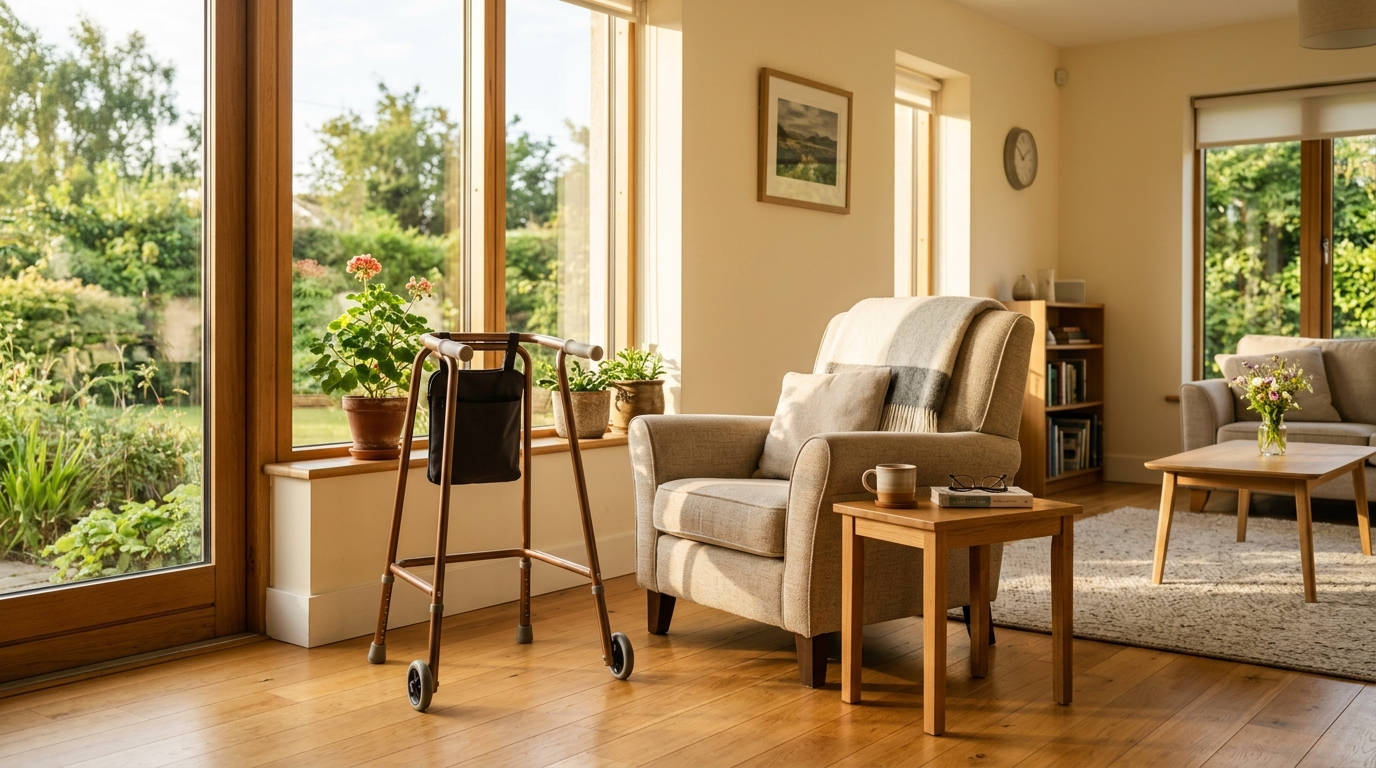
Maintaining independence at home is one of the most valued aspects of everyday life, and small, thoughtful changes to the home environment can make an enormous difference to how safe and confident a space feels. Whether you are planning ahead, supporting a family member, or adapting after a change in circumstances, knowing where to start can feel overwhelming. The good news is that making a home safer for independent living does not require a full renovation — in many cases, a handful of targeted adjustments and the right support equipment are all that is needed.
At elderlycareproducts.ie, we work with Irish households every day to provide the mobility aids, supports, and practical products that help people live comfortably and securely on their own terms. This room-by-room guide covers the most impactful changes you can make throughout the home, from the hallway to the bedroom, with practical advice you can act on straight away.
Falls are the leading cause of injury-related hospital admissions in Ireland, and most occur in the home. Reducing fall risk is not about limiting activity — it is about creating an environment where confident, steady movement is possible throughout the day. Let us walk through each area of the home and explore what genuinely makes a difference.
How to Make the Hallway and Entrance Safer for Independent Living
The entrance to the home is often the first and last point of risk each day. Navigating keys, steps, uneven paths, and doorways — sometimes carrying bags or using a mobility aid — means the hallway deserves careful attention.
Lighting and Visibility
Poor lighting is one of the most common and easily corrected hazards in the home. Install bright, energy-efficient LED bulbs in all hallway and entrance areas. Motion-activated lighting is particularly useful for early mornings or evenings, removing the need to fumble for a switch. Ensure the path from the front door to the main living areas is always well lit, including any steps or level changes.
Flooring and Trip Hazards
- Remove loose rugs or secure them with non-slip backing and double-sided tape
- Ensure door thresholds are flush or ramped rather than raised
- Keep the hallway clear of shoes, bags, and clutter at all times
- Consider replacing highly polished or slippery floor surfaces with textured, non-slip alternatives
Key Storage and Door Access
A key safe mounted near the front door can be invaluable, giving trusted family members or carers access without the need for spare keys to be passed around. For those who find traditional door handles difficult, lever-style handles require far less grip strength than round knobs and are a straightforward swap that makes a noticeable difference.
Bathroom Safety: The Highest-Risk Room in the Home
The bathroom is statistically the most hazardous room for falls, largely because of wet surfaces and the physical demands of bathing, using the toilet, and moving between positions. Fortunately, it is also the room where targeted adaptations deliver the greatest benefit.
Grab Rails and Support Bars
Professionally fitted grab rails alongside the toilet, in the shower, and near the bath are among the most cost-effective safety investments available. They should be fixed into wall studs or use appropriate wall anchors to ensure they can bear real weight. Position rails at a height that feels natural during the specific movements they are intended to support — standing from the toilet, stepping into the shower, or lowering into the bath.
Non-Slip Surfaces
- Place non-slip mats inside and immediately outside the shower or bath
- Apply non-slip strips to the base of the bath if it has a smooth surface
- Ensure the bathroom floor mat has a rubberised, non-slip backing
Seating and Shower Aids
A shower chair or bath board allows bathing to take place in a seated, stable position, reducing the physical demands of standing throughout. A handheld shower head attachment adds further flexibility, making it easier to wash without stretching or overreaching. These straightforward additions can meaningfully extend the ability to bathe independently and safely.
Toilet Height
Standard toilet heights can make sitting and standing more effortful than necessary. Raised toilet seat attachments increase the seat height by several centimetres, reducing the degree of knee and hip flexion required. Many versions include armrests for additional support when lowering and rising.
Kitchen Safety for Confident, Independent Living
The kitchen involves heat, sharp objects, and a great deal of movement between worktops, the cooker, and storage. A few practical adjustments significantly reduce the risk of accidents and make everyday tasks more manageable.
Storage and Accessibility
Store the items used most frequently at worktop height or within easy reach, avoiding the need to stretch up to high shelves or bend down to low cupboards. A sturdy kitchen trolley with wheels can double as a work surface and a means of transporting items safely from one part of the kitchen to another without carrying them freehand.
Cooker and Appliance Safety
- Use the rear hobs first where possible to avoid reaching over hot front burners
- Consider an induction hob if replacing appliances — the surface remains cooler and there is no open flame
- Install an automatic gas or cooker shut-off device if there is a concern about appliances being left on
- Use a kettle tipper to avoid lifting a full, heavy kettle
Flooring and Seating
As with the hallway, kitchen floors should be free from loose mats and spillages cleaned up immediately. A perching stool positioned at the worktop allows tasks like chopping, washing up, and preparing food to be carried out in a supported semi-seated position, reducing fatigue significantly.
Living Room and Bedroom: Everyday Spaces for Safe, Steady Movement
The rooms where most time is spent are also the rooms where furniture layout, seating choices, and flooring surfaces have the greatest cumulative effect on daily confidence and safety.
Furniture Layout and Clearance
Ensure walkways between furniture are wide enough to navigate comfortably, particularly if a rollator or walking frame is in use. As a general guideline, a clear path of at least 80–90 cm is recommended for comfortable movement with a mobility aid. Avoid positioning low coffee tables or footstools where they could be walked into unexpectedly.
Chair and Bed Height
Chairs and sofas that are too low make standing up effortful and increase the risk of a fall during the transition. Chair raisers can be fitted under existing furniture legs to bring seats to a more appropriate height. Similarly, adjustable bed risers or a profiling mattress can make getting in and out of bed significantly easier. Beds that are too high or too low both present challenges — aim for a height where the feet rest flat on the floor when seated on the edge.
For those who find it difficult to move around the bedroom independently, a rollator or walking frame provides a reliable means of support between the bed, wardrobe, and en-suite. Modern rollators are lightweight, foldable, and designed to navigate indoor spaces comfortably.
Lighting in Sleeping Areas
A bedside lamp with an easy-to-operate switch, or a motion-activated night light positioned between the bed and the bathroom, reduces the risk of disorientation and trips during night-time movement. Plug-in night lights are inexpensive and require no installation.
Bedroom Organisation
- Keep frequently needed items — glasses, phone, medication — at a consistent, easy-to-reach bedside location
- Avoid trailing cables from lamps or phone chargers across walking paths
- Ensure the wardrobe is organised so that the most-used items do not require reaching or bending
Mobility Aids: Choosing the Right Support for Around the Home
The right mobility aid transforms how a home environment is experienced. For indoor use, the choice typically comes down to the level of support required and the layout of the home.
Rollators and Walking Frames
Rollators — wheeled walking frames with a seat, handlebars, and often a storage basket — are among the most versatile and widely used indoor mobility aids. They provide stable support during walking, offer a rest option when needed, and can be used to carry items safely from room to room. Our rollators and frames collection includes a range of styles suitable for different home layouts and individual needs, supplied by Timago with an average delivery time of 5–7 working days across Ireland.
Wheelchairs for Indoor Mobility
For those who require more comprehensive support, a lightweight manual wheelchair may be appropriate for certain situations or longer distances indoors. Ensure doorways are wide enough and that thresholds are manageable before selecting a wheelchair for regular home use. Browse our wheelchair range for options suited to indoor environments.
Joint Supports for Everyday Tasks
Many everyday tasks — from opening jars to walking to the kitchen — are made more comfortable with appropriate joint support. Wrist, knee, and ankle supports can reduce discomfort during movement without restricting independence. Explore our joint supports collection for options that complement an active home routine.
Frequently Asked Questions: Home Safety for Independent Living
What is the most important change I can make to improve home safety?
Addressing fall risks is the single most impactful priority. Start with the bathroom — install grab rails, use non-slip mats, and consider a shower seat. The bathroom is the highest-risk room in the home, and these changes can be made relatively quickly and affordably.
Do I need a professional to assess my home for safety?
A formal home assessment by an occupational therapist (OT) is highly recommended and is often available through the HSE or your local primary care team in Ireland. An OT can identify risks you may not have considered and recommend specific adaptations tailored to individual circumstances. Many adaptations, however, can be implemented independently using this type of guide as a starting point.
Are there financial supports available in Ireland for home adaptations?
Yes — the Housing Adaptation Grant for People with a Disability and the Mobility Aids Grant are available through local authorities in Ireland. These grants can cover a portion of the cost of adaptations such as grab rails, stair lifts, and accessible bathroom installations. Contact your local county council for eligibility details and application information.
What should I look for when choosing a rollator for indoor use?
For indoor use, look for a compact frame width that fits comfortably through standard doorways (typically 60–65 cm or narrower), a turning radius that suits tighter spaces, and a lightweight frame for easy manoeuvring. Loop brakes — which lock when pressed — are generally considered safer than push-down brakes for indoor environments. A built-in seat and basket add useful functionality for everyday tasks.
How can I make stairs safer without installing a stairlift?
Ensure both sides of the staircase have a secure, continuous handrail at a comfortable gripping height. Keep stairs clear of any objects, and ensure stair carpet or treads are firmly fixed. Good lighting — ideally with switches at both the top and bottom of the stairs — is essential. For those who find stairs very challenging, a stairlift assessment through an OT is advisable.
Can mobility aids be used effectively in a small home or flat?
Yes — many modern rollators and walking frames are specifically designed for compact living spaces. Foldable models can be stored easily when not in use, and narrower frames navigate smaller hallways and doorways with ease. It is worth measuring your narrowest doorway before selecting a model to ensure compatibility.
Conclusion
Making a home safer for independent living is not a single task — it is an ongoing process of observation, adjustment, and investment in the right tools. The changes that matter most are often smaller than people expect: a grab rail in the right place, better lighting on the landing, a rollator that makes the kitchen feel navigable again. Taken together, these adjustments create an environment where daily life can be lived with greater ease, confidence, and dignity.
At elderlycareproducts.ie, we are here to support every step of that process. From rollators and wheelchairs to joint supports and specialist footcare, our range is chosen specifically for the Irish market and delivered directly to your door. Browse our best-selling products and take the first step towards a safer, more comfortable home today.