
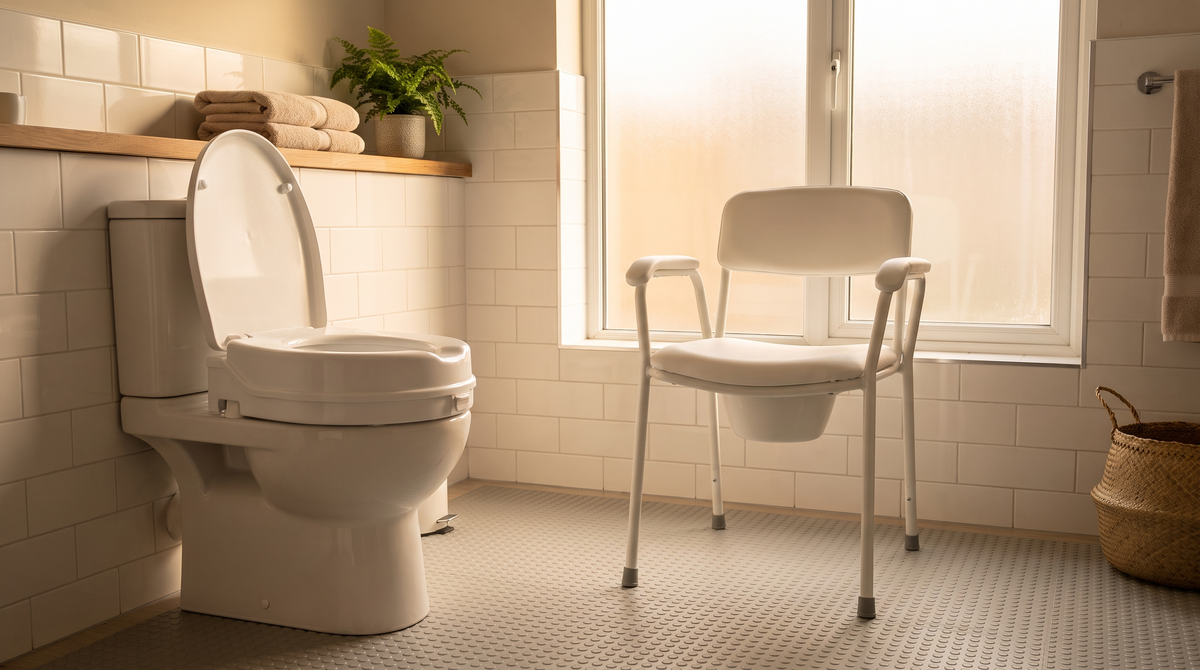
Choosing the right bathroom aid can make an enormous difference to daily comfort, dignity, and confidence at home. Whether you are exploring options for yourself or helping a family member maintain independence, understanding the practical differences between a commode and a raised toilet seat is an important first step. Both are widely used, both serve a clear purpose — but they suit different circumstances, spaces, and needs.
This guide breaks down exactly what each product does, how they compare across key factors, and what questions to ask before making a decision. By the end, you will have a clear picture of which bathroom aid is the better fit for your home and routine.
At elderlycareproducts.ie, we stock a broad range of shower chairs and commodes as well as raised toilet seats, so whatever direction you choose, you will find trusted options ready to order and delivered directly to your door across Ireland.
What Is a Raised Toilet Seat?
A raised toilet seat is a device that fits directly onto your existing toilet bowl, increasing the overall seat height by typically 5 cm to 15 cm depending on the model. The core purpose is straightforward: by bringing the seat closer to the user, it reduces the depth of the sit-to-stand movement, making the process significantly easier on the hips, knees, and lower back.
Types of Raised Toilet Seats
- Fixed raised seats: Clip or bolt directly onto the toilet bowl for a secure, stable fit. Ideal where only one person uses the bathroom adaptation.
- Hinged raised seats: Feature a hinge mechanism so the raised section can be folded up, allowing other household members to use the toilet at its standard height. A practical compromise in shared bathrooms.
- Raised seats with armrests: Provide additional lateral support for pushing up from a seated position, reducing strain on wrists, arms, and shoulders.
- Padded raised seats: Offer extra comfort for longer sitting periods or for those with pressure sensitivity.
Who Benefits Most from a Raised Toilet Seat?
Raised toilet seats work particularly well in situations where the toilet itself is accessible but the height presents a challenge. They are a discreet, cost-effective solution that keeps the existing bathroom layout intact. There is no additional furniture to navigate around, and the toilet remains in its original location — important in smaller Irish homes and apartments where space is at a premium.
From a practical standpoint, a raised toilet seat is often the first bathroom adaptation people consider because it integrates seamlessly into the room. Visitors may not even notice it has been fitted.
What Is a Commode Chair?
A commode chair is a freestanding seat with an integrated waste bucket or pan positioned beneath the seat. It functions as a portable, self-contained toilet alternative that can be placed anywhere in the home — beside a bed, in a living room, or in a bedroom where accessing a distant bathroom is inconvenient or unsafe during the night.
Types of Commodes
- Standard freestanding commodes: Four-legged chairs with a removable bucket beneath the seat. Simple, stable, and straightforward to clean.
- Commode chairs with armrests: Armrests on either side provide support when sitting down and rising, making the process safer and more independent.
- Folding commodes: Lightweight, collapsible frames ideal for travel, caravan use, or where storage space is limited.
- Shower commodes: Designed for use both as a commode and as a shower chair, these are particularly useful where a wet room or walk-in shower is in use. They often feature drainage holes and rust-resistant frames.
- Over-toilet commodes: Positioned directly over the standard toilet, these function like a raised seat with armrests but can also be moved away from the toilet entirely when needed — offering genuine dual-purpose flexibility.
When Is a Commode the Right Choice?
A commode is particularly valuable where the distance to the bathroom creates a safety concern, especially during the night. For those who find nighttime journeys across the home stressful or risky, having a commode positioned close to the bed removes that challenge entirely. It can also be the right solution in homes where the bathroom layout — narrow doorways, step-in shower trays, cramped floor space — makes safe toilet access difficult regardless of aids fitted to the toilet itself.
Commodes are also commonly used during post-operative recovery or periods of reduced stamina, where conserving energy between a bed and a bathroom matters. Explore the full shower chairs and commodes range at elderlycareproducts.ie to see which styles are available.
Commodes vs Raised Toilet Seats: A Direct Comparison
Understanding the differences side by side makes the decision considerably clearer. Below is a practical breakdown across the factors that matter most.
Portability and Placement
A raised toilet seat is fixed to a single toilet and cannot be relocated during use. A commode, on the other hand, can be positioned wherever it is needed most — beside the bed at night, in a different room, or taken away on a trip. If flexibility of placement is a priority, the commode wins clearly.
Space and Home Layout
In a compact bathroom or en suite, a raised toilet seat is almost always the tidier option. It adds virtually no floor footprint beyond the existing toilet. A commode requires clear floor space around it and, when positioned in a bedroom or living area, becomes a visible piece of equipment. Homes with more space will find commodes easier to accommodate discreetly.
Ease of Use and Independence
Both aids are designed to support independent use, but in different ways. A raised toilet seat reduces the physical effort of sitting and rising from the toilet. A commode with armrests does the same, while also eliminating the need to walk to the bathroom at all. For those focusing on preserving bathroom independence with minimal disruption to routine, a raised seat is often preferred. For those prioritising nighttime safety or post-operative recovery, a commode often provides greater practical benefit.
Hygiene and Maintenance
Raised toilet seats connect directly to the existing toilet plumbing and drainage system, so waste management is identical to standard toilet use. Commodes require the internal bucket or pan to be emptied, cleaned, and disinfected regularly. This is manageable but does add a maintenance step that some people prefer to avoid. Many modern commodes include splash-guard pans and tight-fitting lids that minimise odour and make the cleaning process straightforward.
Cost
Both product types are available at accessible price points. Raised toilet seats with armrests tend to sit in the mid-range of bathroom aid pricing. Commodes vary more widely depending on whether they are basic freestanding models or multi-function shower commodes with padded seating and adjustable frames. In general, neither product category requires a significant investment compared to larger home modifications.
Compatibility with Other Bathroom Aids
Raised toilet seats complement other bathroom safety products well. Pairing one with non-slip mats and grab rails creates a comprehensive, layered approach to bathroom safety. Commodes similarly work well alongside other aids, particularly where a full bathroom safety setup is being planned with the help of an occupational therapist or home care professional.
How to Make the Right Choice for Your Home
There is no universally correct answer between a commode and a raised toilet seat — the right choice depends on your specific home, routine, and circumstances. Working through a few key questions can clarify the decision quickly.
Key Questions to Ask
- Is the bathroom safely accessible? If navigating to the bathroom involves stairs, a long corridor, or a narrow doorway that is difficult to manage, a commode near the sleeping area may provide better everyday safety than any toilet adaptation alone.
- Is nighttime access a concern? Many people find that nocturnal trips to the bathroom are the highest-risk moments of the day. A bedside commode directly addresses this without requiring any structural bathroom modification.
- Is the toilet itself already at a manageable location? If the bathroom is nearby and accessible but the toilet height is the primary challenge, a raised toilet seat addresses the issue directly and discreetly.
- Are multiple people using the same bathroom? A hinged raised toilet seat allows the adaptation to be raised out of the way for other users. A commode used as an over-toilet frame also offers dual-purpose flexibility in a shared bathroom.
- How important is discretion? For many people, maintaining a standard-looking bathroom is important for self-esteem and for the comfort of guests. A raised toilet seat is far less visually prominent than a freestanding commode.
- Is this a temporary or long-term need? For short-term recovery after surgery or illness, a portable folding commode may be the most practical and cost-effective option. For a long-term adaptation, investing in a well-fitted raised seat with armrests often makes more sense.
When to Consider Both
It is worth noting that commodes and raised toilet seats are not mutually exclusive. Many households use a raised toilet seat fitted to the main bathroom toilet for daytime use, while keeping a commode nearby the bedroom for nighttime convenience. This "belt and braces" approach provides comprehensive coverage without requiring any single product to do everything.
Frequently Asked Questions
What height should a raised toilet seat be?
The right height depends on the individual and their existing toilet. As a general guide, when seated the hips should be level with or very slightly above the knees. Most raised toilet seats add between 5 cm and 15 cm. Measuring the current toilet seat height and comparing it against a comfortable seated position is the most reliable approach.
Can a commode be used directly over an existing toilet?
Yes. Many commodes are designed as over-toilet frames, meaning they position directly over the standard toilet bowl. In this configuration they act as a raised seat with armrests and use normal toilet plumbing — no bucket is needed. They can then be moved away from the toilet when required, offering genuine dual-purpose use.
Are raised toilet seats suitable for all toilet shapes?
Most raised toilet seats are designed to fit standard D-shaped or oval toilet bowls, but it is important to check compatibility before purchasing. Some models offer adjustable fittings to accommodate a wider range of bowl sizes. Square-shaped toilet pans may require a specific fitting, so checking product specifications carefully is advisable.
How do I clean a commode bucket safely?
Empty the commode bucket promptly after each use. Rinse thoroughly with warm water, then clean with a suitable disinfectant solution. Allow to dry fully before reinserting. Many commode pans have splash-guard lids which help contain odour between use. Wearing disposable gloves during cleaning is strongly recommended for hygiene.
Will a raised toilet seat affect the toilet flush or seat lid?
A well-fitted raised toilet seat should not interfere with the flush mechanism or the existing toilet seat lid. However, the original toilet seat lid may not close fully over a raised seat — this varies by model and is worth checking in product descriptions. Some people remove the original toilet seat entirely when a raised seat is fitted.
Do I need a prescription or referral to purchase these products in Ireland?
No prescription is required to purchase a raised toilet seat or commode from elderlycareproducts.ie. Both are available to order directly. If you are unsure which option is most appropriate for your specific situation, consulting with an occupational therapist or physiotherapist can be very helpful before purchasing.
Conclusion
Both commodes and raised toilet seats play a genuine, valuable role in supporting safe and independent living at home. The right choice comes down to your bathroom layout, daily routine, level of accessibility, and whether flexibility of placement matters more than a discreet, fixed solution. For many households, the answer is one product for the bathroom and one for the bedroom — a practical combination that covers all bases.
At elderlycareproducts.ie, you will find a carefully selected range of both product types, from simple raised seats to full shower commodes with padded armrests. Browse our raised toilet seats and shower chairs and commodes collections today to find the right fit for your home.