
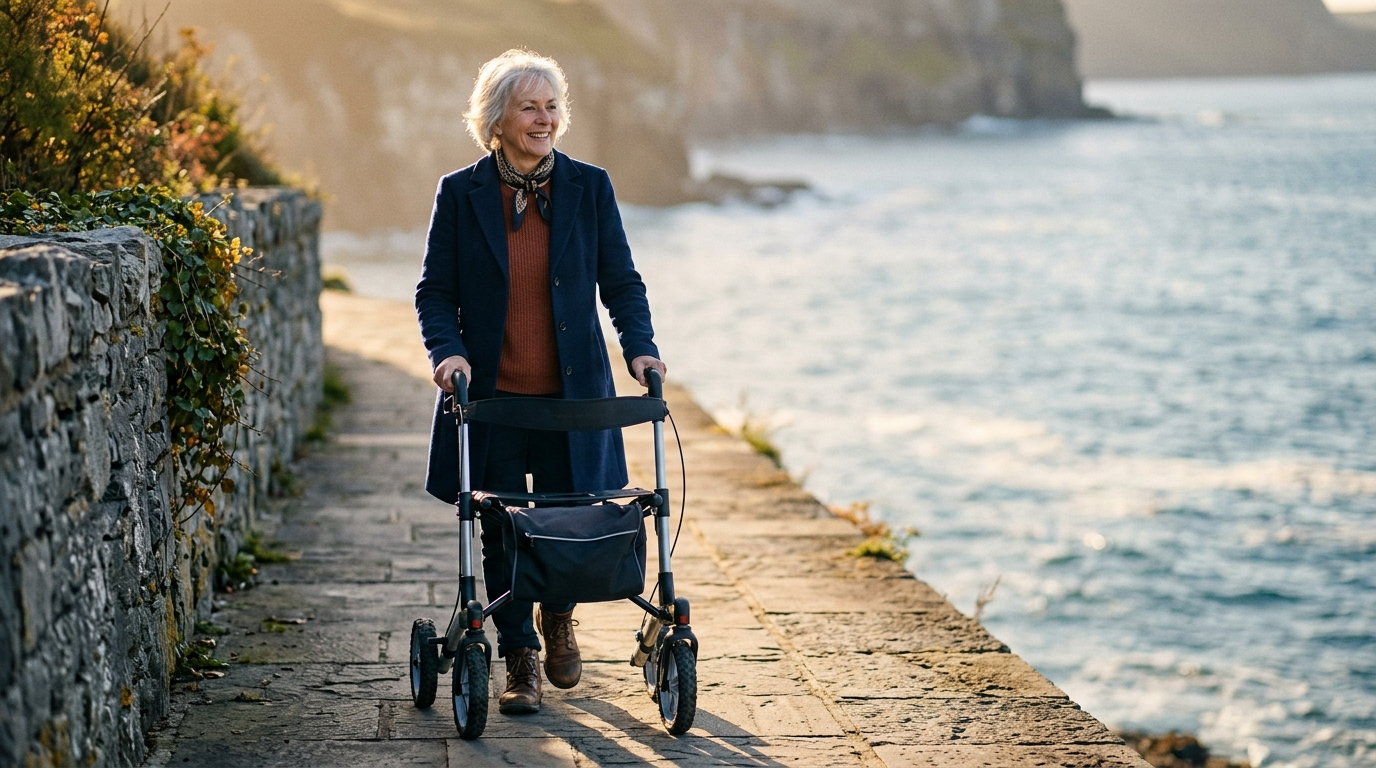
Choosing a rollator walker for outdoor use is a very different decision from picking one for indoor corridors or kitchen floors. Pavements, gravel paths, grassy parks, cobbled town centres, and the unpredictable Irish weather all place very specific demands on a walking frame — demands that an entry-level indoor model simply is not built to handle. The right outdoor rollator can transform daily life, making a walk to the local shops, a stroll through the park, or a trip to a weekend market feel safe, stable, and genuinely enjoyable.
This guide covers everything you need to know before buying: from wheel size and brake systems to frame materials and folding mechanisms. Whether you are buying for yourself or researching on behalf of a family member, understanding these features will help you make a confident, well-informed choice that stands up to real Irish outdoor conditions.
At elderlycareproducts.ie, we stock a curated range of premium rollator walkers sourced from trusted suppliers, including Timago in Poland — known throughout Europe for robust, well-engineered frames that perform reliably on varied terrain. Read on to find out exactly what to look for in the best rollator walkers for outdoor use.
Why Outdoor Rollators Are Different from Indoor Models
It is tempting to assume that any rollator walker will do the job, indoors or out. In practice, the differences between an indoor and a purpose-designed outdoor rollator are significant — and they matter most when the ground beneath your feet is uneven, wet, or unpredictable.
Terrain Demands More from Every Component
Indoor rollators are typically designed for smooth, flat surfaces: tiled hallways, wooden floors, linoleum. Their wheels can be smaller, their frames lighter, and their braking systems simpler, because the conditions are controlled. Step outside onto a cracked pavement, a gravel path, or a wet park walkway, and those same features can become liabilities rather than assets. Smaller wheels catch in cracks and drain covers. Light frames flex under the lateral forces of uneven ground. Brakes that work perfectly on flat lino may feel inadequate on a slope.
Weather Adds an Extra Layer of Consideration
In Ireland, outdoor use means planning for rain, wind, and damp surfaces — often all on the same afternoon. This affects everything from grip on handles to corrosion resistance on frames and the performance of brake cables over time. A well-specified outdoor rollator will use weather-resistant materials, sealed or rubberised grips, and brake mechanisms designed to maintain consistent performance even when wet.
Key Features to Look for in Outdoor Rollator Walkers
When evaluating the best rollator walkers for outdoor use, there are six core features that separate a genuinely capable outdoor model from one that will struggle beyond the front door. Understanding each one will help you assess any rollator you consider — from our range or elsewhere.
1. Wheel Size: The Single Most Important Factor
Wheel size is arguably the most critical specification for outdoor performance. As a general rule:
- Wheels under 6 inches (150 mm): Best suited to smooth indoor surfaces only. They are prone to catching on cracks, kerb lips, and uneven joins in paving.
- Wheels of 6–7 inches (150–175 mm): A versatile mid-range size suitable for smooth outdoor paths, flat car parks, and gentle terrain. Many popular three-wheeled and four-wheeled rollators fall into this bracket.
- Wheels of 8 inches (200 mm) and above: The preferred choice for genuinely mixed terrain — gravel, grass, cobblestones, and more challenging surfaces. Larger wheels roll over obstacles rather than stopping at them, creating a smoother, more controlled walking experience.
Look for pneumatic (air-filled) or high-density foam-filled tyres on larger wheel models. These absorb vibration from rough surfaces, reducing the jarring sensation that can travel up through the frame and handles.
2. Braking System: Reliability When It Matters Most
A dependable braking system is non-negotiable for outdoor use, particularly on slopes and inclines. Most outdoor rollators use one of two main brake configurations:
- Loop brakes (squeeze to brake, hold to lock): The most common type. Squeezing the handles applies resistance; pressing down fully locks the brakes when stationary. Look for cable systems that are enclosed or weather-protected to maintain consistent tension over time.
- Push-down brakes: Found on some simpler frame walkers — less common on full rollators. Not generally recommended for outdoor use on slopes.
When testing or reviewing a rollator, the brake levers should be reachable without awkward stretching, the resistance should feel progressive rather than sudden, and the locking mechanism should engage cleanly and hold securely on a gentle slope.
3. Frame Material: Balancing Strength and Weight
The two most common frame materials in quality outdoor rollators are aluminium and steel. Each has genuine advantages:
- Aluminium: Lightweight, rust-resistant, and easy to lift into a car boot or onto public transport. Ideal for those who need to fold and carry the rollator frequently. Timago frames use high-grade aluminium that keeps weight low without sacrificing structural rigidity.
- Steel: Heavier but exceptionally robust. May suit those who prioritise maximum stability over portability, or who use the rollator primarily on foot without frequent transport.
For most people using a rollator outdoors in Ireland — particularly those who drive or use public transport — a lightweight aluminium frame offers the best balance of durability, portability, and corrosion resistance.
4. Seat and Storage: Practical Comfort for Longer Outings
One of the key advantages of a rollator over a standard walking frame is the integrated seat, which allows for a rest whenever needed. For outdoor use, this becomes especially valuable on longer walks, in town centres, or at outdoor markets where benches may be scarce.
Look for:
- A padded or contoured seat wide enough to sit comfortably (typically 30–35 cm)
- A storage bag or basket beneath the seat for essentials: a water bottle, phone, shopping, or a rain jacket
- A seat height that allows feet to rest flat on the ground — adjustable seat height is a significant advantage here
5. Handle Height Adjustability
Correct handle height is essential for posture and safe use. Handles set too low cause a forward stoop that reduces stability; set too high, they encourage an upright lean that reduces control. As a general guide, handles should align roughly with the crease of the wrist when standing upright with arms relaxed at the sides.
Quality outdoor rollators offer a wide range of handle height adjustment — typically in 2.5 cm increments — to accommodate different heights precisely. Always verify the adjustment range before purchasing, and ensure the locking mechanism holds firmly once set.
6. Folding Mechanism and Portability
Even the most capable outdoor rollator is only useful if it can be transported easily. A well-designed folding mechanism should:
- Collapse the rollator in a single, intuitive motion — no tools required
- Reduce the frame to a compact size that fits in most car boots
- Reopen and lock securely without needing to check alignment or tighten components
Many Timago rollators feature a cross-brace folding system that collapses the frame laterally, keeping overall dimensions slim for easy storage. Some models also fold at the handles for additional compactness during transport.
Browse our full range of rollator walkers at elderlycareproducts.ie →Choosing the Right Rollator for Different Outdoor Environments
Not all outdoor use is the same. A coastal promenade, a city-centre pavement, and a country park path each present different challenges. Matching your rollator to the environments you actually use most often is an important step in choosing well.
Urban Pavements and Town Centres
Urban surfaces in Irish towns and cities tend to vary considerably — smooth footpaths giving way to cobblestones, dropped kerbs of varying quality, and occasional drain covers that can catch smaller wheels. For regular urban use, a rollator with 6–7 inch wheels, a lightweight aluminium frame, and reliable loop brakes is a strong all-round choice. A compact folded size is also an advantage if you are likely to enter shops, cafés, or public buildings.
Parks, Coastal Paths, and Recreational Routes
For longer recreational walks on mixed terrain, larger wheels (8 inches or above) with pneumatic or foam-filled tyres make a genuine difference in comfort and control. A padded seat and under-seat storage become more valuable on longer outings, and a robust frame that handles the occasional rough patch without flexing is worth prioritising. Models with all-terrain wheel specifications are well suited to the varied surfaces found on many Irish greenway and coastal walking routes.
Gravel Driveways and Garden Use
Gravel is one of the more challenging surfaces for any wheeled mobility aid. Small, loose stones create resistance and instability for narrow or small-diameter wheels. If gravel driveways, garden paths, or farm lanes are part of daily life, prioritise larger-diameter, wider-profile tyres that sit on top of loose surfaces rather than sinking into them. A wider wheelbase also helps here, providing a more stable platform on shifting ground.
Rollator Safety Tips for Outdoor Use
Even the best-specified rollator walker performs only as well as the person using it. Following a few straightforward guidelines will help ensure safe, confident use across a range of outdoor settings.
Before Each Outing
- Check that all four wheels spin freely and evenly — a sticking wheel can cause unexpected directional pull
- Test both brakes: they should engage smoothly and lock securely
- Confirm that handle height adjustments are locked firmly in place
- Ensure the seat latch is properly engaged if the rollator has been folded and reopened
- In wet weather, allow a moment for brakes to clear any surface water before relying on them on a slope
During Use
- Keep the rollator close to the body — walking too far behind it reduces control and puts strain on the lower back
- When sitting on the seat, apply the brakes firmly first and check the surface is level
- Approach kerbs and steps with caution: tilt the rollator slightly back to raise the front wheels over an obstacle, rather than pushing straight into it
- On slopes, keep a light, consistent pressure on the brakes rather than gripping tightly and releasing suddenly
Regular Maintenance
- Wipe down the frame and wheels after use in wet or muddy conditions to prevent corrosion and debris build-up
- Check brake cable tension periodically — cables can stretch slightly with regular use and may need minor adjustment
- Inspect wheel tyres for wear, particularly if the rollator is used frequently on abrasive surfaces such as tarmac or concrete
- Store indoors or under cover when not in use to extend the working life of rubber components
Frequently Asked Questions About Outdoor Rollator Walkers
What is the best wheel size for an outdoor rollator walker?
For most outdoor surfaces, wheels of at least 6–7 inches (150–175 mm) are recommended, with 8-inch (200 mm) wheels preferred for mixed or rough terrain such as gravel, grass, or uneven paving. Larger wheels roll over small obstacles more smoothly and provide greater stability on challenging surfaces. Pneumatic or foam-filled tyres on larger wheels also help absorb vibration from rough ground.
Can I use an indoor rollator outdoors?
Indoor rollators can be used on smooth, flat outdoor surfaces such as well-maintained footpaths or car parks. However, they are generally not recommended for mixed terrain, gravel, grass, or uneven surfaces. Their smaller wheels, lighter frames, and less robust brake systems are not designed for the demands of varied outdoor environments, which can compromise stability and safety.
How do I choose the correct handle height on a rollator?
Stand upright with arms relaxed at your sides. The handles should align approximately with the crease of your wrist. Handles set too low encourage a forward lean, reducing stability; too high and you lose control of the frame. Most quality rollators offer adjustable handle height in increments of around 2.5 cm — always ensure the adjustment locks are tightened firmly before use.
Are rollator walkers suitable for use in wet conditions?
Quality outdoor rollators are designed to perform in wet conditions, but some precautions are worthwhile. Allow brakes a moment to clear surface water on steep slopes. Check that grip surfaces on handles remain non-slip when wet — rubberised or textured grips are preferable to smooth plastic. Wipe down the frame and dry brake cables after use in heavy rain to extend the working life of components.
How much should I expect to spend on a good outdoor rollator in Ireland?
A well-specified outdoor rollator from a reputable supplier typically falls in the €100–€300 range, depending on wheel size, frame specification, and additional features such as seat padding, storage, and fold mechanism quality. Budget models under €80 tend to use smaller wheels and lighter-duty components that may not perform reliably on varied terrain over time. Investing in a mid-range or premium model from a trusted supplier generally offers better long-term value.
What is the weight limit on most outdoor rollator walkers?
Standard outdoor rollators typically support a user weight of up to 100–130 kg (approximately 15–20 stone). Heavy-duty or bariatric rollator models are available for higher weight requirements, often rated to 160 kg or more, and feature reinforced frames and wider seats. Always check the manufacturer's stated weight capacity before purchasing and do not exceed it, as this can affect structural integrity and brake performance.
Conclusion
Finding the best rollator walker for outdoor use comes down to matching the right combination of wheel size, frame quality, braking system, and practical features to the specific environments and routines that matter most to you. A rollator that performs confidently on coastal paths, town-centre pavements, and gravel driveways does not happen by accident — it is the result of thoughtful engineering and appropriate specification for real-world outdoor conditions.
At elderlycareproducts.ie, we stock a carefully selected range of outdoor-capable rollator walkers from trusted suppliers, with delivery across the Republic of Ireland. Whether you need a lightweight aluminium frame for urban use or a larger-wheeled all-terrain model for recreational walks, our range is designed to support steady, confident movement wherever the day takes you.
Explore our rollator walker collection at elderlycareproducts.ie →