
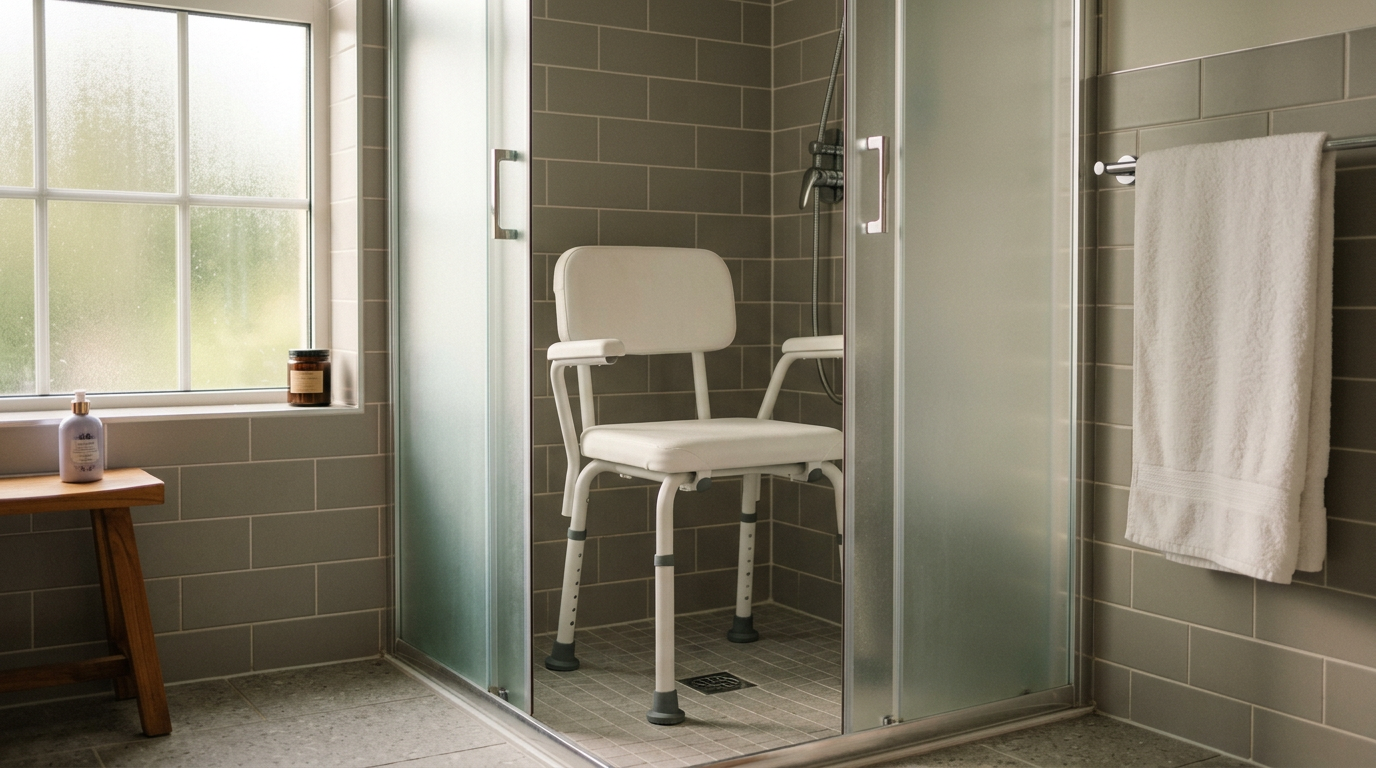
Choosing the right bathing support can make an enormous difference to confidence and comfort in the bathroom. Whether you are setting up a wet room, adapting a traditional bath, or simply looking for a little extra steadiness during a shower, the choice between a shower chair and a bath seat is one that deserves careful thought. Both serve an important purpose, but they are designed for quite different bathing setups — and picking the wrong one can mean it sits unused rather than providing the support it was bought for.
This guide breaks down exactly how shower chairs and bath seats differ, what features matter most, and how to decide which option suits your bathroom layout and daily routine. If you are supporting a family member or thinking ahead about your own comfort and independence at home, read on — by the end, you will have a clear picture of which product belongs in your bathroom.
What Is a Shower Chair and What Is a Bath Seat?
Before comparing the two, it helps to understand what each product actually is. The terms are sometimes used loosely, but shower chairs and bath seats are genuinely distinct pieces of equipment designed for different environments.
Shower Chairs Explained
A shower chair is a freestanding or wall-mounted seat designed for use inside a shower enclosure or wet room. Most models have four legs fitted with non-slip rubber feet, a moulded or padded seat with drainage holes, and either fixed or adjustable armrests. Height is typically adjustable to suit the user and the specific shower tray or floor level. Some shower chairs fold flat for easy storage, which makes them a practical choice in shared bathrooms.
The key benefit of a shower chair is that it allows a person to sit comfortably while showering, removing the need to stand for the full duration of a wash. This is particularly valuable where balance or stamina is a consideration, or simply where comfort during a longer shower matters.
Bath Seats Explained
A bath seat, sometimes called a bath board or bath transfer bench, is designed specifically for use in or across a traditional bathtub. These products come in several forms. A simple bath seat sits inside the bath at a raised height, reducing how far a person needs to lower themselves into and out of the water. A bath transfer bench extends across the side of the bath, allowing the user to sit on the outside portion first, then slide across into the bath without needing to step over the side.
Bath seats are about making bathtub access safer and easier rather than replacing the bathing experience. They are engineered for the specific dimensions and sloped interior of a standard bath, and they should not be used in a shower enclosure where they were not designed to work.
Key Differences Between Shower Chairs and Bath Seats
Understanding the differences between these two product types helps to cut through confusion and ensure you invest in something genuinely useful for your bathroom setup.
Design and Structure
Shower chairs are designed to stand freely on a flat, level surface — the floor of a walk-in shower, a wet room floor, or a shower tray. Their legs are spread wide for stability, and the seat is usually contoured with drainage holes to allow water to pass through freely.
Bath seats, by contrast, are shaped and sized to fit within or across a bathtub. Transfer benches in particular have two legs inside the bath and two legs outside, bridging the tub wall. This bridging design would be unstable and inappropriate outside of a bathtub context.
Height and Adjustability
Most quality shower chairs offer height adjustment via push-button or clip-pin leg extensions, allowing the seat to be raised or lowered to suit the user and the shower floor level. This flexibility makes them versatile across different bathroom configurations.
Bath seats also often offer some height adjustment, but the priority is fitting securely within the bath dimensions. A seat that is too high inside a bath may not rest stably, so correct sizing matters more here than pure adjustability.
Safety Features
Both product types should feature non-slip rubber feet as standard. Shower chairs frequently come with armrests on both sides for additional support when sitting down or standing up. Some models include a padded or contoured seat for extra comfort during longer use.
Bath seats often include non-slip pads on the seat surface itself, since the interior of a bath can be particularly slippery when wet. Transfer benches typically include a handgrip or cutout to assist with the sliding transfer movement.
How to Decide Which One You Need
The single most important factor in choosing between a shower chair and a bath seat is your bathroom setup. No amount of product features will compensate for choosing equipment designed for the wrong environment.
Do You Have a Shower or a Bath?
If your bathroom has a walk-in shower, a wet room, or a shower over a tray, a shower chair is the correct choice. There is no bath rim to bridge, no bathtub interior to accommodate — a freestanding shower chair positioned on the shower floor is exactly what the space requires.
If you have a traditional bathtub and prefer bathing over showering, a bath seat is the appropriate solution. It will help reduce the effort and risk involved in getting into and out of the bath while still allowing you to enjoy a full soak.
What If You Have Both a Bath and a Shower?
Many Irish homes have a combination bathroom — a bathtub with an overhead shower attachment, sometimes with a shower screen on one end. In this case, the right choice depends on how you primarily use the space.
- If you mainly shower using the overhead attachment and stand in the bath to do so, a bath seat can double as an in-bath shower seat in some configurations — but a dedicated shower chair is generally more stable and purpose-built for this use.
- If you take full baths regularly and only use the shower occasionally, a bath seat is likely the more practical investment.
- Some households benefit from having both — a shower chair for daily showers and a bath seat for occasional bathing. Where bathroom space allows, this covers all scenarios.
Considering Stability and Confidence
Think honestly about how much support is needed during the bathing routine. If standing for even a short time during a shower is tiring or unsteady, a shower chair with full armrests provides seated stability throughout the entire wash. If the main challenge is simply the high step over a bathtub rim, a bath transfer bench addresses that specific issue without necessarily requiring a full seated shower experience.
For those who want to remain seated throughout bathing rather than lowering into a full bath, a shower chair paired with a handheld shower head is often the most practical and dignified long-term solution.
Features Worth Looking for in Each Product
Once you have identified whether a shower chair or bath seat suits your situation, it is worth knowing which specific features to prioritise.
Features to Look for in a Shower Chair
- Adjustable height: Ensures a proper fit for the shower tray height and the user's leg length.
- Non-slip rubber feet: Essential for stability on wet shower floors. Look for wide feet or suction-cup feet on smooth tiles.
- Drainage holes in the seat: Prevents water from pooling and keeps the seat surface safer and more hygienic.
- Armrests: Provide support when sitting down and rising — ideally adjustable or removable to allow easier transfers.
- Weight capacity: Always check the stated maximum weight to ensure the chair is suitable.
- Folding design (optional): Useful in shared bathrooms where the chair needs to be stored between uses.
Features to Look for in a Bath Seat
- Secure locking feet: Both internal and external legs must grip the bath and floor without slipping.
- Non-slip seat surface: The seat itself should have a textured or rubberised surface.
- Correct width for your bath: Transfer benches especially need to match your bath's dimensions — measure before purchasing.
- Easy to clean: Look for materials that resist mould and can be wiped down quickly.
- Handgrip or cutout: Assists with the transfer motion across the bath rim.
If you are looking for additional support during daily movement beyond the bathroom, our rollator and walking frame collection offers a wide range of options for steady, confident movement around the home and outdoors.
Practical Tips for Bathroom Safety Beyond the Chair or Seat
A shower chair or bath seat is one part of a safer bathroom setup, but it rarely stands alone as the only useful adaptation. A few complementary measures can significantly improve overall bathroom confidence.
Grab Rails and Non-Slip Mats
Grab rails fitted beside the shower or bath provide a fixed point to hold when transitioning to and from the seat. They are particularly valuable at the moment of standing up, when the combination of wet surfaces and effort creates the greatest risk of imbalance. Non-slip mats both inside and outside the shower or bath add an important layer of protection on wet floors.
Handheld Shower Heads
A shower chair works best when paired with a handheld, flexible shower head. This allows thorough washing while seated without the need to move around under a fixed overhead spray. Most standard shower heads can be replaced or extended with a flexible hose attachment relatively easily.
Good Lighting
Bathroom lighting is often overlooked when planning adaptations, but good visibility matters — particularly first thing in the morning or during a night-time visit to the bathroom. Ensure the bathroom is well lit and consider a night light in the hallway leading to it.
For those managing joint discomfort or requiring additional lower-limb support during daily activities, our joint supports range may also be worth exploring.
Frequently Asked Questions
Can I use a shower chair in a bathtub?
A shower chair is designed for a flat, level surface and is not intended for use inside a bathtub. Bathtubs have a curved, sloped interior that a shower chair's legs cannot grip safely. Using a shower chair in a bath creates a significant risk of slipping or tipping. If you need seated support in a bath, choose a purpose-made bath seat instead.
What is the difference between a bath seat and a bath transfer bench?
A bath seat sits entirely inside the bathtub and raises the seated height within the bath. A bath transfer bench extends both inside and outside the bath, allowing the user to sit on the outer portion first and slide across into the tub without lifting their leg over the full height of the bath rim. Transfer benches are particularly useful where stepping over the bath side is difficult.
How do I know if a shower chair will fit in my shower?
Measure the internal dimensions of your shower tray or enclosure before purchasing. Pay attention to both the width and depth. A shower chair should sit fully within the shower area with the door able to close, and the feet should all rest flat on the shower floor. Most product listings include the chair's folded and unfolded dimensions to help with this.
Are shower chairs suitable for heavier users?
Most standard shower chairs are rated to carry between 100 kg and 130 kg, but heavy-duty models are available with higher weight capacities. Always check the product's stated maximum weight rating before purchasing and choose a model that comfortably exceeds the user's weight for an additional margin of safety.
Can a shower chair be used by more than one person in a shared household?
Yes. Height-adjustable shower chairs can be adapted to suit different users simply by repositioning the leg height settings. Folding shower chairs are especially practical in shared bathrooms as they can be folded away after each use, keeping the bathroom clear for others.
Do I need a professional to fit a bath seat or shower chair?
Most shower chairs and bath seats require no installation at all — they are freestanding and simply placed in position. Bath transfer benches may require a small amount of setup to ensure the legs are correctly positioned and locked. Neither product typically requires a tradesperson or permanent fixing to walls, which makes them a flexible and renter-friendly option.
Conclusion
The choice between a shower chair and a bath seat ultimately comes down to one straightforward question: what kind of bathing setup do you have? Shower chairs are purpose-built for shower enclosures and wet rooms, offering seated stability throughout the entire shower. Bath seats are designed for traditional bathtubs, making it easier and safer to get in and out without the full effort of lowering to the base of the bath. Using either product in the environment it was not designed for undermines both its safety and its effectiveness.
Once you have matched the product type to your bathroom, focus on the features that matter most for your specific situation — adjustable height, non-slip surfaces, weight capacity, and ease of use. Both types of bathing support can make a genuine and lasting difference to daily comfort and independence at home. Explore our full range of products designed for steady, confident everyday living at elderlycareproducts.ie.