
Choosing the right walking aid can make a genuine difference to how confidently and comfortably you move through daily life. Two of the most common options — rollators and walking frames — are often compared side by side, yet they serve quite different purposes and suit different needs. Understanding what sets them apart is the first step towards making a well-informed decision.
In this guide, we compare rollators vs walking frames across the areas that matter most: support, manoeuvrability, indoor and outdoor use, storage, and long-term practicality. Whether you are looking for a walking aid for yourself or helping a loved one explore their options, this breakdown will help you feel confident in your choice.
At elderlycareproducts.ie, we stock a curated range of both rollators and walking frames — sourced from trusted suppliers and chosen for quality, comfort, and ease of use. Let us walk you through everything you need to know.
What Is a Walking Frame?
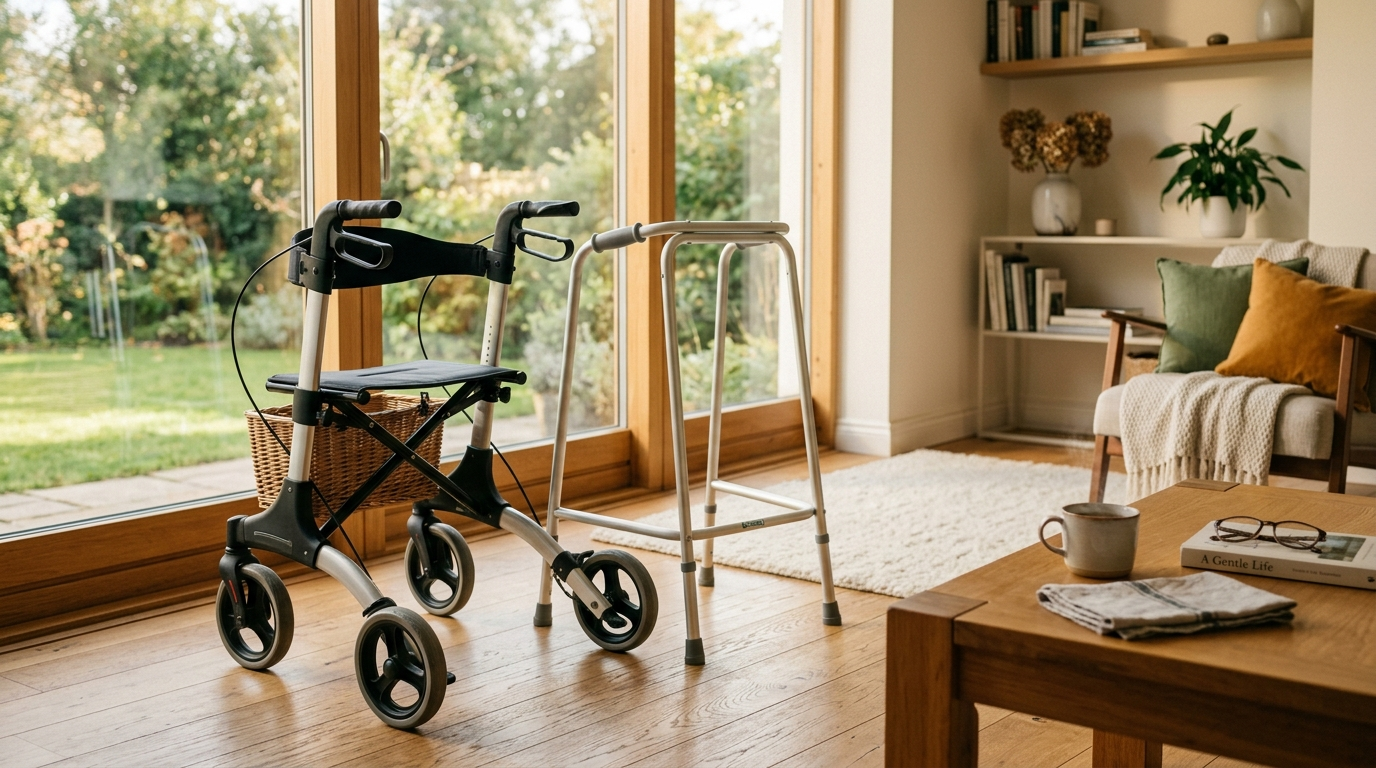
A walking frame — sometimes called a Zimmer frame — is a rigid, four-legged aid that provides a stable base of support during movement. It has no wheels, which means it must be lifted and placed forward with each step. This straightforward design has made it a reliable option in clinical and home settings for decades.
Key Features of a Walking Frame
- No wheels: Maximum grip on the floor surface with each placement
- Lightweight construction: Typically made from aluminium, making it easy to handle
- Height adjustable: Most frames can be adjusted to suit the user's height
- Low profile design: Compact and straightforward to use in tight indoor spaces
- Minimal moving parts: Very little that can go wrong or require maintenance
When Is a Walking Frame Typically Recommended?
Walking frames are often recommended following surgery, injury, or during short-term recovery when maximum stability is the priority. Because the frame does not move until deliberately lifted and repositioned, it provides a highly controlled form of support for those who need to move slowly and carefully. They tend to work best on smooth, indoor surfaces such as timber floors, tiles, or low-pile carpet.
What Is a Rollator?
A rollator is a wheeled walking aid — typically fitted with three or four wheels, a braking system, a padded seat, and often an under-seat basket or pouch for storage. Unlike a walking frame, a rollator moves with you rather than being lifted with each step, allowing for a more natural, flowing gait.
Key Features of a Rollator
- Wheels: Usually four wheels (or three on a narrower tri-wheel model), allowing smooth, continuous movement
- Hand brakes: Loop or push-down brakes give control over speed and allow the rollator to be locked in place when stationary
- Padded seat: Allows for resting breaks during longer outings without needing to find a chair
- Storage basket or bag: Practical for carrying personal items, shopping, or essentials
- Height adjustable handles: Suitable for a wide range of heights
- Foldable frame: Most rollators fold flat for easy transport in a car boot or storage at home
When Is a Rollator Typically Recommended?
Rollators are well suited to those who are broadly stable on their feet but benefit from something to lean on or rest against during longer walks or outings. They are particularly practical outdoors — on paths, pavements, and uneven terrain — where a fixed walking frame would be difficult to use. Many people find the built-in seat invaluable during shopping trips or walks in the park, knowing they can pause and rest whenever needed.
Browse our full range at: Rollators & Frames at elderlycareproducts.ie
Rollators vs Walking Frames: A Direct Comparison
Now that we have outlined the basics, let us look at how these two aids compare across the most important practical categories.
Support and Stability
Walking frames offer the highest level of passive stability because they do not move unless deliberately lifted. For those who need to bear significant weight through their arms or require a completely static base between steps, a walking frame provides more reassurance in this regard.
Rollators, by contrast, move continuously — which is actually closer to a natural walking motion. However, this means the user must have reasonable balance and the ability to apply the brakes safely when stopping or sitting. For those who are broadly steady on their feet, rollators provide excellent support during movement without interrupting stride.
Ease of Movement and Gait
One of the most significant advantages of a rollator is that it encourages a more natural walking gait. Because you do not need to stop, lift, and reposition with each step, movement feels more fluid and less effortful. This can reduce fatigue over longer distances and make outings more enjoyable.
Walking frames, due to their lift-and-place motion, naturally slow the user down. This is beneficial during recovery or in situations where slow, deliberate movement is preferable — but it can become tiring over longer distances or repeated journeys throughout the day.
Indoor vs Outdoor Use
Walking frames are best suited to indoor environments with smooth, flat surfaces. They can become cumbersome outdoors, particularly on uneven pavements, gravel, or grass, where lifting the frame repeatedly over varied terrain is challenging.
Rollators are far more versatile outdoors. Many models feature larger wheels with rubber tyres that handle outdoor terrain well, including paths, gentle inclines, and light cobbling. For those who wish to maintain an active lifestyle beyond the home, a rollator is generally the more practical choice.
Rest and Convenience Features
This is where rollators hold a clear advantage. The integrated padded seat means you can rest at any point during a walk without needing to locate a bench or chair. The storage basket or bag means you can carry your belongings hands-free — particularly useful when shopping or travelling.
Walking frames offer none of these additional features by design. They are purely functional stability aids, which suits some users perfectly — but for those who value independence and practicality during longer outings, the rollator's added features can be genuinely life-enhancing.
Portability and Storage
Most modern rollators fold flat and can be loaded into a car boot without difficulty, making them ideal for those who wish to use their aid away from home — at appointments, in shops, or visiting family. Some models, such as those in the byACRE collection, are engineered for ultra-lightweight portability with premium materials.
Walking frames are also lightweight and compact, though they do not fold in the same way. They tend to be slightly smaller overall, which can be an advantage in very confined spaces such as narrow hallways or small bathrooms.
Maintenance and Durability
Walking frames are mechanically simple — there are no brakes, cables, or wheels to maintain. This makes them extremely low-maintenance and long-lasting. A well-made aluminium frame requires very little attention beyond occasional cleaning.
Rollators require a little more care. Brake cables should be checked periodically to ensure they engage correctly, and wheels should be inspected for wear. That said, most quality rollators are built to last for years with minimal upkeep, and replacement parts are generally available from reputable suppliers.
Which Is Better — Rollator or Walking Frame?
The honest answer is that neither is universally better — the right choice depends entirely on the individual's level of stability, lifestyle, and intended use. Here is a simple way to think about it:
A Walking Frame May Be the Better Choice If:
- You are recovering from surgery or injury and need maximum stability in the short term
- Movement is primarily indoors on flat, smooth surfaces
- A slow, deliberate walking pace is necessary or preferred
- Simplicity and minimal moving parts are important
- A healthcare professional has specifically recommended a static frame
A Rollator May Be the Better Choice If:
- You wish to maintain an active lifestyle indoors and outdoors
- Being able to rest during longer walks is important
- Carrying personal items hands-free would be helpful
- You want a more natural walking motion with less fatigue
- Portability for travel, shopping, or appointments is a priority
Many people find that they begin with a walking frame during a recovery period and transition to a rollator as their confidence and mobility improve. Others use both — a rollator for outdoor use and a frame for certain indoor tasks. There is no single correct answer, and speaking with a physiotherapist or occupational therapist can help clarify which option is most appropriate for your specific circumstances.
To explore our full selection of both types: Browse Rollators & Frames at elderlycareproducts.ie
Rollators Available at elderlycareproducts.ie
Our rollator range includes models from Timago, a leading Polish manufacturer known for producing durable, well-engineered mobility aids. Timago rollators are available with an estimated delivery time of 5–7 working days to addresses across the Republic of Ireland.
We also stock models from the byACRE collection — a premium Scandinavian brand renowned for carbon fibre and ultra-lightweight rollators that combine clinical functionality with refined design. If you are looking for a rollator that performs exceptionally without feeling clinical or heavy, byACRE is worth exploring.
Our best-selling mobility aids include a selection of rollators that our customers return to again and again — chosen for their balance of value, reliability, and ease of use.
Frequently Asked Questions
Is a rollator safer than a walking frame?
Neither is inherently safer — it depends on the individual's balance and mobility. Walking frames offer more static stability, while rollators provide dynamic support with a more natural gait. A physiotherapist or occupational therapist can advise on which is most appropriate for your situation.
Can a rollator be used indoors?
Yes, absolutely. Most rollators are well suited to indoor use on hard floors and low-pile carpet. Narrower models are designed specifically to navigate hallways and doorways with ease. However, very plush carpets can make wheeled aids harder to push, so it is worth considering your home's flooring.
Do rollators fold for travel?
Most modern rollators fold flat, making them straightforward to load into a car boot or store in a cupboard. Some models — particularly those in the byACRE range — are specifically engineered for lightweight portability and easy folding.
What is the difference between a rollator and a wheeled walking frame?
A wheeled walking frame typically has two wheels at the front and two fixed rubber feet at the rear, meaning it glides forward but stays put when you apply pressure. A rollator has four wheels with a hand brake system, a padded seat, and generally more features for outdoor and longer-distance use.
How do I know if a rollator handle height is right for me?
When standing upright with your arms relaxed at your sides, the handles should align roughly with your wrist crease. Handles set too high cause shoulder strain, while handles set too low encourage a forward hunch. Most rollators offer a generous height adjustment range to accommodate different builds.
Are rollators available with next-day delivery in Ireland?
Rollators from our Timago range are dispatched with an estimated delivery time of 5–7 working days to addresses across the Republic of Ireland. Delivery timelines can vary, so we recommend checking the individual product listing for the most up-to-date information.
Conclusion
Both rollators and walking frames have a valuable role to play in supporting confident, independent movement — but they are designed for different situations. Walking frames excel when static stability and simplicity are the priority, particularly during recovery or in carefully controlled indoor environments. Rollators shine for those who want to stay active, move more naturally, and enjoy the freedom of outdoor use with the reassurance of a rest stop built right in.
At elderlycareproducts.ie, we are here to help you find the right aid for your lifestyle — not just the most popular one. Explore our full range of rollators, walking frames, and accessories, and feel free to get in touch if you have questions about which model might suit you best.
View our full Rollators & Frames collection at elderlycareproducts.ie