
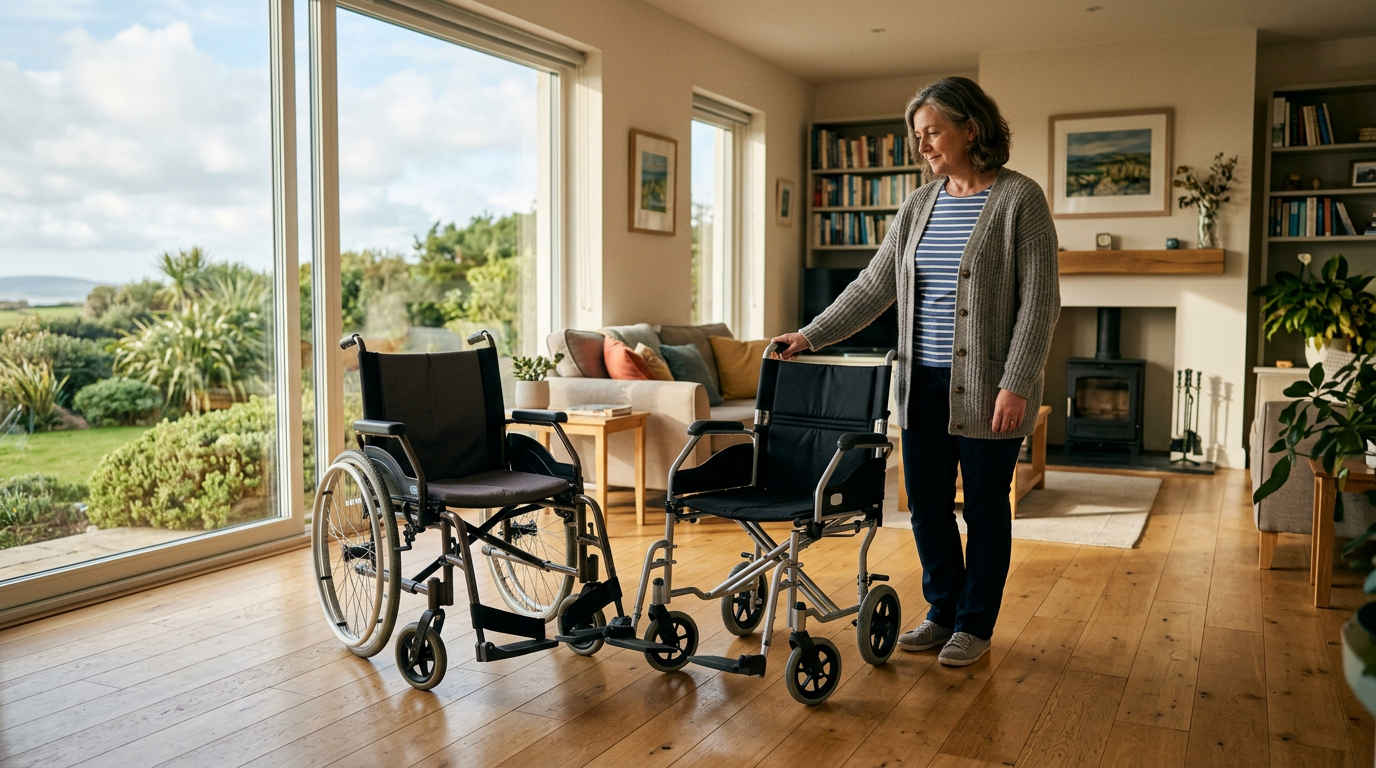
Choosing the right wheelchair is one of the most practical decisions you can make when it comes to everyday mobility and independence. With so many options available, the distinction between a manual wheelchair and a transport wheelchair is a question that comes up regularly — and it is one that genuinely matters. The wrong choice can affect comfort, ease of use, and day-to-day practicality in significant ways.
At elderlycareproducts.ie, we work with trusted suppliers to offer a carefully selected range of wheelchairs suited to a variety of needs and living situations across Ireland. Whether you are sourcing a chair for home use, for outings, or for travel, understanding the fundamental differences between these two wheelchair types will help you invest wisely.
This guide walks through the key distinctions between manual wheelchairs and transport wheelchairs — covering design, functionality, suitability, and practical considerations — so you can make a confident, informed decision.
What Is a Manual Wheelchair?
A manual wheelchair, often referred to as a self-propelled wheelchair, is designed primarily for users who wish to move themselves independently. The defining feature is the pair of large rear wheels, each fitted with a push rim that allows the user to propel the chair forward, backward, and around corners using their own upper body strength.
Key Design Features of Manual Wheelchairs
- Large rear wheels: Typically 24 inches in diameter, enabling self-propulsion via hand rims
- Smaller front castors: Allow for smooth directional changes and navigation around furniture or narrow spaces
- Adjustable footrests: Usually swing-away or detachable for easier transfers and compact storage
- Armrests: Often padded and adjustable, supporting comfort during longer periods of use
- Rear push handles: Present on most models so a carer or companion can assist when needed
- Weight: Generally heavier than transport chairs due to the larger wheel assembly, though lightweight aluminium models are widely available
Who Is a Manual Wheelchair Best Suited To?
A manual wheelchair is a strong choice for those who have adequate upper body strength and wish to maintain a level of independent movement. It also works well for users who split their time between self-propulsion and assisted pushing, as the rear push handles make it straightforward for a companion to take over when required.
Because the user can drive the chair themselves, a manual wheelchair is particularly well suited to home environments, longer outings, and any situation where independence and flexibility are priorities.
Explore our full wheelchair range at elderlycareproducts.ie
What Is a Transport Wheelchair?
A transport wheelchair — sometimes called a transit wheelchair or attendant-propelled wheelchair — is specifically engineered to be pushed by a companion or carer rather than operated independently by the user. The most immediately visible difference is that all four wheels are small, meaning there are no large rear push rims for self-propulsion.
Key Design Features of Transport Wheelchairs
- Four small wheels: Typically around 12 to 16 inches in diameter at the rear, making self-propulsion impractical
- Compact, lightweight frame: Transport chairs are generally lighter than manual wheelchairs, making them easier to lift in and out of vehicles
- Rear push handles: The primary control point, used exclusively by the attendant
- Folding frame: Most models fold flat quickly for storage in a car boot or overhead compartment
- Basic seating and footrests: Designed for comfort over shorter journeys rather than extended daily use
Who Is a Transport Wheelchair Best Suited To?
A transport wheelchair is ideal in situations where an attendant, family member, or carer is always available to assist with movement. It is commonly used for appointments, shopping trips, travel, or any outing where the user does not need or wish to self-propel.
The lighter weight and compact fold make transport wheelchairs particularly popular for travel — they fit easily into most car boots and are generally straightforward to manage at airports, in shopping centres, or on public transport.
Manual Wheelchair vs Transport Wheelchair: Head-to-Head Comparison
Now that we have covered the basics of each type, here is a direct comparison across the factors that matter most when making your decision.
Independence and Self-Propulsion
This is the most significant practical difference between the two chair types. A manual wheelchair empowers the user to move around freely without relying on another person at all times. A transport wheelchair, by contrast, requires an attendant to be present and physically pushing — the user cannot navigate independently.
If maintaining independent movement throughout the day is important, a manual wheelchair is the clear choice. If the user prefers to be assisted, or if self-propulsion is not feasible, a transport wheelchair is more appropriate.
Weight and Portability
Transport wheelchairs typically win on portability. Their smaller wheels and simpler frames make them noticeably lighter — many models weigh between 9 and 13 kg — which is a genuine advantage when loading into a car or navigating busy environments. Manual wheelchairs with large rear wheels are naturally heavier, though modern aluminium-frame options have narrowed this gap considerably.
For frequent travel or use across multiple locations, the transport wheelchair's lighter weight is a meaningful practical benefit.
Comfort During Extended Use
Manual wheelchairs are generally better suited to longer periods of continuous use. They tend to feature more adjustable components — including seat width, back height, and leg rest angle — allowing for a more customised fit. The larger rear wheels also absorb uneven terrain more effectively, contributing to a smoother ride over longer distances.
Transport wheelchairs are designed with shorter journeys in mind. While they offer adequate comfort for outings and appointments, extended daily use may be less comfortable than a well-fitted manual chair.
Indoor vs Outdoor Use
Both wheelchair types can be used indoors and outdoors, though each has its strengths. Manual wheelchairs handle a wider range of outdoor surfaces — including slight inclines, rougher paths, and longer distances — thanks to their larger rear wheels. Transport wheelchairs are well suited to smooth indoor floors, paved paths, and shopping centres, but may struggle slightly on uneven outdoor terrain.
If the chair will be used regularly outdoors across varied terrain, a manual wheelchair is generally the more capable option.
Ease of Use for the Attendant
From the attendant's perspective, transport wheelchairs are often easier to push due to their lighter weight. However, a manual wheelchair gives both user and attendant more flexibility — the user can assist with propulsion on flat surfaces, reducing the physical demand on the attendant over time.
Price and Value
Transport wheelchairs are typically more affordable than comparable manual wheelchairs. Their simpler construction and lighter materials generally translate to a lower price point, making them an accessible entry-level option. Manual wheelchairs vary more widely in price depending on features, adjustability, and frame materials, but they offer greater long-term versatility for those who need it.
Practical Considerations Before You Buy
Beyond the head-to-head comparison, there are a number of practical questions worth working through before making your final decision.
Where Will the Wheelchair Be Used Most?
Think carefully about the primary environment. A home with tight doorways and narrow hallways may call for a narrower transport chair. A larger outdoor environment or active daily routine may benefit from the versatility of a self-propelled manual wheelchair. Consider both the user's home layout and their typical daily activities.
Will the Chair Need to Fit in a Vehicle?
If the wheelchair will regularly be transported by car, weight and folded dimensions are important. Measure your car boot before purchasing, and check the folded dimensions of any chair you are considering. Transport wheelchairs tend to have a smaller folded footprint, though many manual wheelchairs also fold to a manageable size.
Is Upper Body Strength a Factor?
Self-propelling a manual wheelchair requires sustained upper body effort. For users with limited arm or shoulder strength, a transport wheelchair pushed by an attendant may be a more practical and comfortable long-term solution. It is important to be realistic about what is physically manageable day to day.
Will Needs Change Over Time?
It is worth thinking ahead. If a user's needs are likely to change — perhaps shifting from occasional assisted use to more regular independent mobility — a manual wheelchair offers more flexibility to adapt. Speak with a healthcare professional if you are unsure about anticipated changes in mobility.
View our wheelchair collection at elderlycareproducts.ie
Frequently Asked Questions
Can a transport wheelchair be self-propelled?
No. Transport wheelchairs have four small wheels with no push rims, so they cannot be self-propelled by the user. They are designed exclusively to be pushed by an attendant or carer. If independent movement is a priority, a manual self-propelled wheelchair is the appropriate choice.
Are transport wheelchairs safe for outdoor use?
Transport wheelchairs are generally suitable for smooth outdoor surfaces such as pavements, shopping centres, and car parks. They are less well suited to rougher terrain, gravel paths, or significant inclines. For regular outdoor use across varied surfaces, a manual wheelchair with larger rear wheels typically performs better.
How heavy is a typical manual wheelchair compared to a transport wheelchair?
Manual wheelchairs commonly weigh between 14 and 20 kg depending on frame material and features, while transport wheelchairs typically weigh between 9 and 13 kg. Lightweight aluminium manual wheelchairs can bring this gap closer, so it is always worth checking the specifications of individual models before purchasing.
Which type of wheelchair is easier to store at home?
Both types fold for storage, but transport wheelchairs generally fold to a more compact size due to their smaller wheels. If storage space is limited — for example in a hallway or under stairs — a transport wheelchair may be the more practical option. Always check the folded dimensions listed in the product specifications.
Can a carer push both types of wheelchair?
Yes. Both manual and transport wheelchairs feature rear push handles for attendant use. The main difference is that a manual wheelchair also allows the user to move themselves, whereas a transport wheelchair relies entirely on the attendant for movement.
Do I need a prescription or referral to buy a wheelchair in Ireland?
You do not need a prescription to purchase a wheelchair privately. However, if you are seeking a wheelchair through the HSE or another funding scheme, a referral or assessment may be required. For private purchase, you can browse and order directly at elderlycareproducts.ie without a referral.
Finding the Right Wheelchair at elderlycareproducts.ie
Choosing between a manual wheelchair and a transport wheelchair comes down to one central question: how much independence does the user want or need during daily movement? If self-propulsion and flexibility are important, a manual wheelchair is the more capable and versatile choice. If ease of transport, lighter weight, and attendant-assisted movement are the priorities, a transport wheelchair is a practical and cost-effective solution.
At elderlycareproducts.ie, our wheelchair range includes options across both categories, sourced from quality suppliers and delivered across Ireland. Whether you are making this decision for yourself or for someone you care for, our team is here to help you find the right fit — without pressure, and with straightforward information you can trust.
Browse our full range of wheelchairs at elderlycareproducts.ie