
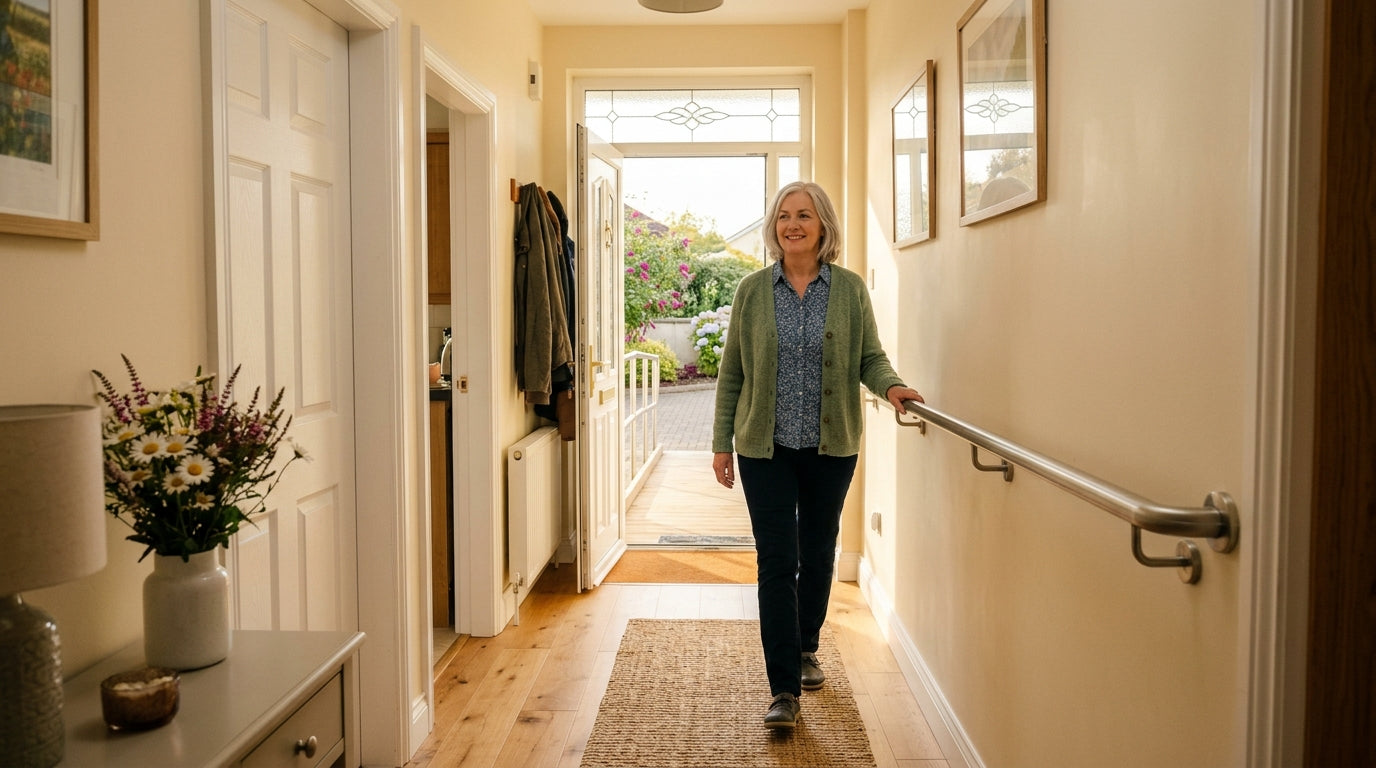
Making a home safer and more comfortable for everyday living is a priority for many families across Ireland — and the good news is that significant financial support is available. The Housing Adaptation Grant Ireland scheme provides funding towards the cost of essential home modifications, helping people maintain independence and move around their homes with greater ease and confidence. Whether it is widening doorways, fitting grab rails, or installing a stair lift, this grant can dramatically reduce the financial burden of necessary alterations.
Administered by local authorities throughout the Republic of Ireland, the Housing Adaptation Grant is one of three related schemes available under the Department of Housing, Local Government and Heritage. Understanding exactly what it covers — and how it differs from the other schemes — is the first step towards accessing the funding you are entitled to. This guide walks you through everything you need to know, from eligibility and covered works to the application process and what happens next.
Alongside grant-funded home modifications, many households also find that sourcing the right mobility and independent living equipment plays a crucial role in day-to-day comfort. At elderlycareproducts.ie, we stock a wide range of products that complement home adaptations and support confident, steady movement throughout the home.
What Is the Housing Adaptation Grant Ireland?
The Housing Adaptation Grant is a means-tested grant provided by local authorities in Ireland to help fund necessary changes to a person's home. The purpose of the grant is to make properties more accessible and suitable for people whose mobility or functional capacity has changed, ensuring they can continue to live safely and independently in their own home rather than moving to alternative accommodation.
The grant scheme sits alongside two related programmes:
- Housing Aid for Older People Grant — focused on repairs and improvements to older properties to bring them up to a basic standard of habitability.
- Mobility Aids Grant — a faster-track, lower-means-tested grant specifically for works that address mobility difficulties, such as grab rails and level-access showers.
These three schemes together form a comprehensive package of support. The Housing Adaptation Grant is the most substantial of the three and covers the widest range of works, particularly structural adaptations.
How Much Funding Is Available?
The maximum grant available under the Housing Adaptation Grant scheme is €30,000, which can represent up to 95% of the approved cost of works, depending on household income. The grant is means-tested, so the percentage of costs covered will reduce as household income increases. Local authorities use a sliding scale to calculate the applicable grant amount for each application.
It is worth noting that grant limits and income thresholds are subject to review, so it is always advisable to check directly with your local authority for the most current figures at the time of your application.
What Does the Housing Adaptation Grant Cover?
The Housing Adaptation Grant Ireland covers a broad range of structural and fixed modifications to a property. The works funded must be recommended as necessary and must be aimed at making the home more suitable for the person living there. Below is a detailed breakdown of the types of works typically covered.
Structural and Accessibility Modifications
- Widening of doorways and hallways — to allow wheelchair or mobility aid access throughout the home
- Installation of ramps — at entrances and steps to remove trip hazards and improve access
- Downstairs bathroom or bedroom provision — converting a ground-floor room to avoid the need to use stairs
- Stair lifts — to allow continued access to upper floors where a downstairs alternative is not possible
- Through-floor lifts — where a stair lift is not a feasible solution
- Accessible wet rooms or walk-in showers — replacing a standard bath with a level-access shower unit
- Extensions — adding space to accommodate an accessible bedroom or bathroom where none exists on the ground floor
Bathroom and Sanitary Facility Adaptations
- Installation of grab rails and support handles in bathrooms and toilets
- Raised toilet seats or height-adjustable sanitary ware
- Accessible bath or shower facilities designed for ease of use
- Slip-resistant flooring in wet areas
Heating and Other Works
In some cases, and particularly where the adaptation project is substantial, the grant may also contribute towards heating improvements that form part of the overall project. However, heating improvements as a standalone concern are generally addressed under the Housing Aid for Older People Grant rather than the Housing Adaptation Grant.
What Is Not Covered?
It is equally important to understand the limitations of the scheme. The following are generally not eligible under the Housing Adaptation Grant:
- General home maintenance or cosmetic decoration
- Works not directly related to improving accessibility or functional use of the property
- Portable or removable equipment (such as free-standing commodes or portable ramps) — these are considered separate from structural works
- Works already completed before the grant application is approved — this is a critical point; works must not commence until grant approval has been received
Who Is Eligible to Apply for the Housing Adaptation Grant?
Eligibility for the Housing Adaptation Grant Ireland is assessed on several grounds. Both the property and the applicant must meet specific criteria set out by the local authority.
Property Eligibility
- The property must be the applicant's primary, permanent place of residence — holiday homes and investment properties do not qualify
- The property must be located within the functional area of the local authority to which the application is made
- Owner-occupied and private rented properties can both be eligible, though landlords must provide written consent for works on a rented property
- The property must be in reasonable structural condition — significant disrepair may need to be addressed separately before adaptation works are approved
Applicant Eligibility
- The applicant must be the owner-occupier or a private tenant (with landlord consent) of the property
- The household income must fall within the means-test thresholds set by the local authority
- A recommendation from a relevant health or occupational therapy professional is generally required to support the application
The Role of an Occupational Therapist
In the vast majority of successful applications, a report from an occupational therapist (OT) is a central supporting document. The OT assesses the person's functional needs within the home and recommends specific adaptations. Many local authorities have OTs on staff, or you may use a privately commissioned OT report. This professional assessment ensures that the works proposed are appropriate and necessary — strengthening your application considerably.
How to Apply for the Housing Adaptation Grant in Ireland
The application process for the Housing Adaptation Grant Ireland is managed by your local authority. While the specifics can vary slightly between county and city councils, the general process follows a consistent framework.
Step-by-Step Application Process
- Contact your local authority — reach out to the housing department of your county or city council to request an application form and confirm current eligibility criteria and income limits.
- Arrange an occupational therapy assessment — either through the HSE or a private OT, to document the specific adaptations recommended for your home.
- Obtain quotes from contractors — you will typically need at least two written quotes for the proposed works from suitably qualified and insured contractors.
- Complete the application form — include all required documentation, such as proof of ownership or tenancy, income details, the OT report, and contractor quotes.
- Submit your application — to your local authority's housing department, either in person or by post as directed.
- Await approval — the local authority will assess your application, which may include an inspection of the property. Do not commence any works until you have received written approval.
- Works are carried out — once approved, your chosen contractor can begin the adaptation works.
- Submit completion documentation — upon completion, submit invoices and any sign-off documentation required by the local authority to release the grant payment.
How Long Does It Take?
Processing times vary between local authorities and depend on demand. It is not uncommon for the process to take several months from initial application to approval. Planning ahead as early as possible is strongly advisable, particularly if the need for adaptations is likely to grow over time.
Complementing Grant-Funded Adaptations with the Right Mobility Equipment
A Housing Adaptation Grant can fund the structural changes to your home, but everyday mobility and comfort are also supported by having the right equipment to hand. Many people find that a good quality rollator walking frame, for instance, provides the additional confidence needed to move around an adapted home safely — particularly on the days between physiotherapy appointments or following a period of reduced activity.
At elderlycareproducts.ie, we supply a carefully selected range of mobility and independent living products sourced from trusted suppliers, including Timago — a respected Polish manufacturer known for robust, well-designed rollators and wheelchairs. Products are delivered directly to your door, so there is no need to travel to a showroom.
If you are considering mobility aids to complement home adaptations, our rollators and walking frames collection is an excellent starting point. For those requiring a wheelchair as part of their home or outdoor mobility solution, our wheelchair range offers a variety of styles to suit different needs and environments. We also stock a comprehensive joint supports range for additional everyday comfort.
Frequently Asked Questions: Housing Adaptation Grant Ireland
Can I apply for the grant if I rent my home?
Yes, private tenants can apply for the Housing Adaptation Grant, but the landlord must provide written consent for the proposed works. The grant is paid to the applicant rather than the landlord, and the works must benefit the tenant's ability to live in the property. It is advisable to discuss any planned adaptations with your landlord as early as possible in the process.
Do I need an occupational therapist report to apply?
In most cases, yes. An occupational therapist assessment is a key supporting document for the majority of Housing Adaptation Grant applications, as it provides professional justification for the specific works proposed. Some local authorities may accept alternative medical evidence in limited circumstances, so contact your local authority directly to confirm their requirements.
Can works begin before the grant is approved?
No. This is one of the most important rules of the scheme. If works commence before the local authority has issued written approval, the application will generally be refused and costs will not be recoverable. Always wait for formal written approval before instructing any contractor to begin work.
What happens if my grant application is refused?
If your application is refused, you should receive a written decision explaining the reason. You have the right to appeal the decision to your local authority. If you believe your application was unfairly assessed, you may also contact the Office of the Ombudsman. In some cases, reapplying with additional supporting documentation — such as a more detailed OT report — can result in a successful outcome.
Is the Housing Adaptation Grant means-tested?
Yes, the grant is means-tested based on gross household income. The maximum grant of €30,000 (up to 95% of approved costs) applies to lower income households, with the percentage of funding decreasing on a sliding scale as household income rises. Each local authority calculates this based on the most current thresholds, so it is best to confirm exact figures with your council.
Can the grant be combined with other funding schemes?
Yes, in some circumstances. The Housing Adaptation Grant, the Mobility Aids Grant, and the Housing Aid for Older People Grant are separate schemes, and a household may potentially access more than one if different needs are identified. However, the same works cannot be funded under multiple schemes simultaneously. A local authority housing officer can advise on the most appropriate combination of supports for your specific situation.
Final Thoughts
The Housing Adaptation Grant Ireland is a genuinely valuable source of financial support for anyone looking to make their home safer, more accessible, and better suited to their everyday needs. From widening doorways and fitting grab rails to installing a stair lift or creating a ground-floor bathroom, the scope of eligible works is broad — and the grant can cover up to 95% of approved costs for eligible households. The key is to plan ahead, engage an occupational therapist early, and always await written approval before commencing any works.
At elderlycareproducts.ie, we are here to support every aspect of independent living at home. While the Housing Adaptation Grant addresses the structural side of home accessibility, we provide the mobility aids and independent living products that complement those changes day to day. Browse our best-selling products or explore our full product range to find the right solutions for your home.