
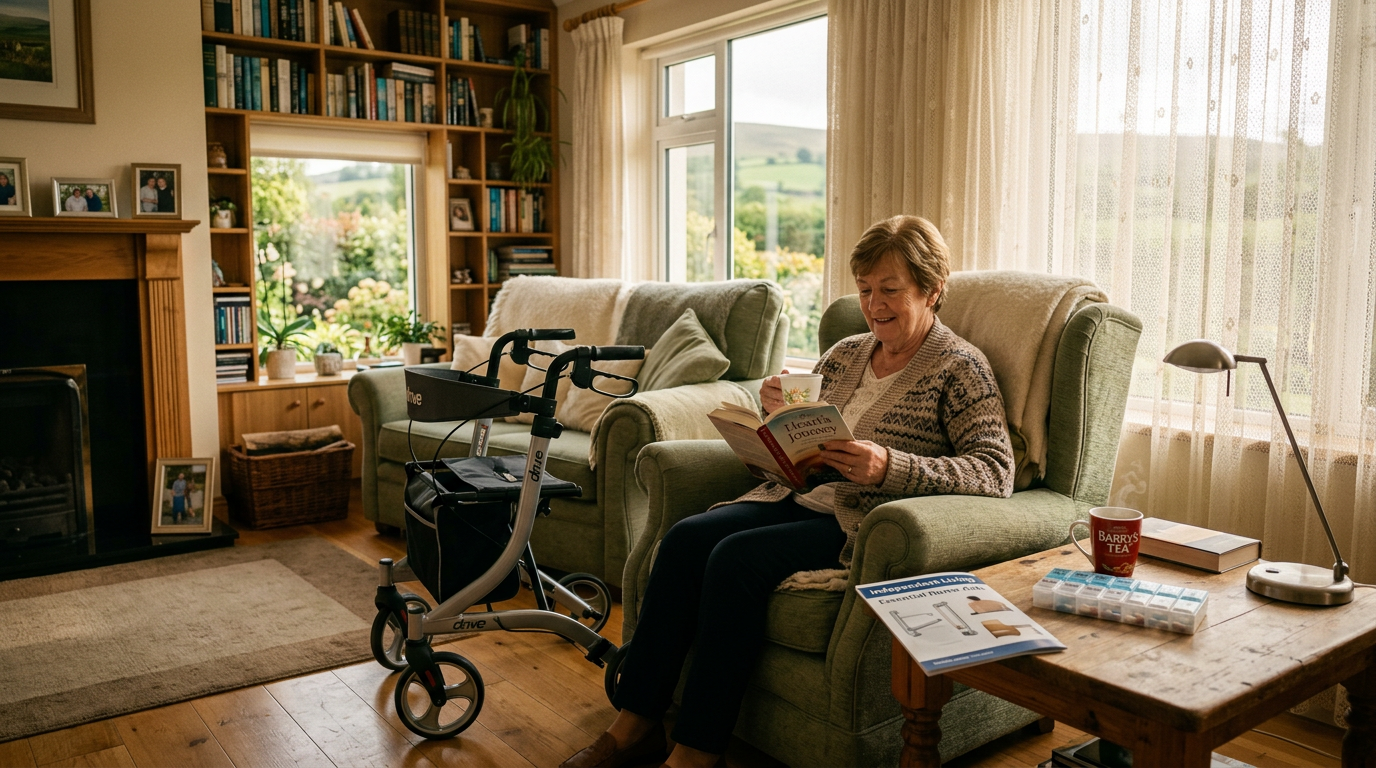
Setting up a home for safe, confident, independent living does not have to be overwhelming — but it does require a methodical approach. Whether you are supporting a family member returning home after a hospital stay, planning ahead for changing mobility needs, or simply looking to make everyday life at home a little easier, having a clear checklist makes all the difference. This guide walks you through every category of home care equipment worth considering, tailored specifically to homes across Ireland.
At elderlycareproducts.ie, we work with trusted suppliers including Fleming Medical in Limerick and Timago in Poland to bring a wide range of quality daily living aids, mobility equipment, and bathroom safety products to customers throughout the Republic of Ireland. This home care equipment checklist Ireland guide is designed to help you think through every room, every routine, and every potential challenge — before it becomes one.
From the hallway to the bathroom, from the kitchen to the bedroom, the right equipment in the right place can meaningfully support independence, reduce the risk of falls, and bring genuine peace of mind to the whole household.
Why a Home Care Equipment Checklist Matters in Ireland
Falls are one of the most common causes of injury-related hospital admissions in Ireland, and the vast majority occur in the home. Yet many of the risks that contribute to falls — uneven surfaces, poor lighting, lack of support rails, inappropriate footwear — can be addressed proactively with relatively simple adaptations and the right equipment.
A structured checklist approach means nothing gets overlooked. It is easy to think about the obvious items — a walking frame, perhaps a shower chair — but overlook smaller details like a non-slip bath mat, a kettle tipper, or a long-handled reacher that could make mornings significantly safer and more manageable. Going room by room, need by need, ensures a thorough assessment rather than a reactive one.
Who Should Use This Checklist?
- Family members helping to prepare a home for a loved one returning after illness or surgery
- Occupational therapists and home care coordinators conducting home assessments
- Anyone planning ahead for changing circumstances at home
- Carers wanting to ensure a safe home environment for those they support
Home Care Equipment Checklist: Room by Room
Hallway and Entrance
The entrance to the home is often the first and last point of risk each day. Ensuring it is well-equipped supports confident movement in and out of the house.
- Grab rail beside the front door: Provides support when stepping over a threshold or managing steps
- Non-slip doormat: A low-pile, firmly anchored mat reduces trip hazards
- Key turner or door lever adaptor: Makes opening doors easier for those with reduced grip strength
- Good overhead lighting: Adequate lighting is one of the simplest and most effective safety measures
- Coat hooks and a sturdy bench or chair: A place to sit and put on shoes safely reduces the need to balance on one foot
- Rollator or walking frame storage: Keeping mobility aids near the door ensures they are used consistently from the moment of departure
Living Room
The living room is typically where the most time is spent during the day, so it is worth ensuring it supports comfortable rest and easy movement.
- Riser recliner chair or chair raise: Assists with standing up from a seated position
- Furniture arranged to allow clear pathways: Wide, unobstructed routes for walking aids are essential
- Telephone or alert device within easy reach: A personal alarm or mobile phone should be accessible from the main seating area
- Remote control holder or tray table: Reduces unnecessary reaching and leaning
- Non-slip rug underlays or removal of loose rugs: Loose rugs are a significant fall hazard and should be secured or removed entirely
Kitchen
The kitchen involves hot liquids, heavy pots, and repetitive reaching — all of which can present challenges. Adaptive kitchen equipment can make meal preparation safer and more enjoyable.
- Kettle tipper or lightweight kettle: Eliminates the need to lift and pour a full kettle
- Dycem non-slip mats: Keep bowls and plates in place during food preparation
- Easy-grip cutlery: Ergonomic handles reduce strain and improve control
- Long-handled reacher or grabber: Allows items on higher or lower shelves to be retrieved safely
- Jar and bottle openers: Reduces the effort and grip strength required
- Perching stool: Allows tasks to be completed at the counter without standing for extended periods
- Liquid dispensing aids: Pump dispensers for washing up liquid, sauces, and other liquids reduce the need for unscrewing lids
For a full selection of bundle deals and daily living aids, browse our daily living aids range at elderlycareproducts.ie.
Bedroom
The bedroom should offer a restful, safe environment — but it is also a place where many daily tasks such as dressing, transferring, and getting up during the night take place.
- Bed rail or grab handle: Provides support when getting in and out of bed
- Bed raiser blocks: Raising the bed height can make transfers significantly easier
- Dressing aids: Long-handled shoe horns, sock aids, and button hooks support independent dressing
- Adequate bedside lighting: A lamp or motion-activated night light reduces the risk of falls during night-time trips to the bathroom
- Over-bed table: Useful for meals, reading, or keeping essentials within reach
- Non-slip slippers or footwear: Proper indoor footwear with grip significantly reduces slip risk
Bathroom and Toilet
The bathroom is statistically the highest-risk room in the home for falls, largely due to wet surfaces, the need to step over bath edges, and the physical demands of bathing and toileting. A well-equipped bathroom is one of the most impactful investments in home safety.
- Grab rails beside the toilet and in the shower or bath: Fixed grab rails provide reliable support for transfers
- Raised toilet seat: Reduces the depth to which one must lower and raise when using the toilet
- Toilet frame or surround: Provides armrests for additional transfer support
- Shower chair or bath bench: Allows bathing to take place from a seated position
- Handheld shower head: Allows flexible rinsing without the need to stand under a fixed shower
- Non-slip bath and shower mats: Essential in any wet area
- Long-handled bath brush or sponge: Supports independent washing without excessive reaching or bending
- Bath lift: For those who wish to continue using a bath, a bath lift assists with getting in and out safely
Our bathroom safety collection at elderlycareproducts.ie includes grab rails, shower chairs, raised toilet seats, and more — all available for delivery across Ireland.
Mobility Aids: Choosing the Right Equipment for Steady Movement
Mobility aids are often the centrepiece of any home care equipment plan. The right aid depends on the level of support needed, the layout of the home, and how the equipment will be used — indoors, outdoors, or both.
Walking Sticks and Crutches
A walking stick provides light support and balance assistance. Adjustable height aluminium sticks are the most versatile option. For greater stability, a quad stick (with four feet) offers a broader base. Walking sticks are most appropriate where balance support rather than weight-bearing is the primary need.
Rollators (Four-Wheeled Walking Frames)
Rollators are among the most popular and versatile mobility aids for home and outdoor use. A quality rollator features four wheels, a padded seat for rest breaks, a storage bag or basket, and hand brakes for control. Timago rollators, available through elderlycareproducts.ie, are designed for both indoor corridor navigation and outdoor use on paths and pavements.
Key features to look for include:
- Adjustable handle height to suit the user
- Lockable brakes for added security
- A padded seat for resting during longer trips
- A basket or bag for carrying personal items
- Lightweight construction for ease of transport in a car boot
View our full rollator range at elderlycareproducts.ie — with models suited to indoor and outdoor use, delivered across Ireland.
Wheelchairs
Where a walking aid is not sufficient, a wheelchair provides a seated transport solution. Self-propelled wheelchairs allow the user to move independently; attendant-propelled models are designed to be pushed by a carer. Consider the width of doorways in the home when selecting a wheelchair, and look for a foldable model if car transport is required.
Browse our wheelchair collection at elderlycareproducts.ie for lightweight, foldable, and heavy-duty options.
Continence Care and Personal Hygiene Equipment
Continence care is an important but often under-discussed element of home care planning. The right products can support dignity, comfort, and confidence in daily life.
Continence Products
- Continence pads and pants: Available in a range of absorbency levels for day and night use
- Bed protection: Waterproof mattress protectors and chair pads help protect furniture and bedding
- Skin care products: Barrier creams and cleansing wipes designed for sensitive skin
- Urinary sheaths and leg bags: For specific management needs where appropriate
Fleming Medical, based in Limerick, supply many of our continence products, with delivery typically available within 3 to 5 working days. Explore our continence products range at elderlycareproducts.ie.
Personal Care Aids
- Long-handled hairbrush and comb
- Electric toothbrush (easier to manage with reduced dexterity)
- Suction nail brush for one-handed nail cleaning
- Tap turners and lever tap adaptors
Joint Supports and Pain Management Aids
Discomfort in the hands, wrists, knees, and back can affect the ability to perform everyday tasks and use mobility aids comfortably. Joint supports and braces can provide targeted support during activity.
Common Joint Supports for Home Use
- Wrist and thumb supports: Provide stability during tasks that involve gripping or lifting
- Knee supports and braces: Offer compression and support during walking or stair use
- Lumbar supports: Can be used on chairs and car seats to maintain posture and reduce lower back strain
- Compression gloves: Support hand comfort and dexterity during fine motor tasks
Our joint supports range at elderlycareproducts.ie includes a wide selection of braces and supports suited to everyday home use.
Frequently Asked Questions: Home Care Equipment in Ireland
What is the most important home care equipment to prioritise first?
Bathroom safety equipment — including grab rails, a non-slip mat, and a shower chair or raised toilet seat — should be the first priority, as the bathroom is the highest-risk area in the home. Once bathroom safety is addressed, mobility aids and bedroom adaptations are the next most impactful areas to consider.
Can I get a grant in Ireland to help pay for home care equipment?
Yes. The Housing Adaptation Grant and the Mobility Aids Grant Scheme, both administered through local authorities, can provide financial assistance towards the cost of adapting a home. The Fair Deal Scheme may also be relevant in some circumstances. It is advisable to contact your local authority or a social worker for guidance on eligibility and application processes.
Do I need a prescription or referral to buy home care equipment in Ireland?
Most daily living aids, mobility aids, and bathroom safety products can be purchased without a prescription. For medical devices or continence products covered under HSE schemes, a referral or prescription may be required. If in doubt, consult your GP or occupational therapist.
How long does delivery take for home care equipment from elderlycareproducts.ie?
Delivery timescales depend on the supplier. Products from Fleming Medical (Limerick) typically arrive within 3 to 5 working days, while Timago products such as rollators and wheelchairs typically arrive within 5 to 7 working days. Delivery is to addresses throughout the Republic of Ireland.
What mobility aid is best for indoor use at home?
For indoor use, a lightweight rollator or a standard walking frame offers good stability and manoeuvrability in typical Irish home layouts. Rollators with lockable brakes and a padded seat are particularly versatile. The best choice depends on corridor widths, flooring type, and the level of support needed — an occupational therapist can advise on the most appropriate option.
How do I assess whether a home is safe for independent living?
A formal home assessment by an occupational therapist is the most thorough approach and can be arranged through a GP referral or the HSE. As a starting point, use a room-by-room checklist like this one to identify areas where falls risks exist, where tasks are difficult to perform safely, and where adaptive equipment might help. Pay particular attention to flooring, lighting, bathroom access, and the availability of support rails throughout the home.
Putting Your Home Care Equipment Checklist Into Action
A checklist is only useful if it is acted upon. The most effective approach is to go through the home systematically — room by room, as outlined above — and note any areas where a piece of equipment, a simple adaptation, or a change to the layout could improve safety or ease of daily life. Prioritise high-risk areas such as the bathroom and staircase first, then work through the rest of the home at a manageable pace.
At elderlycareproducts.ie, we are committed to making quality home care equipment accessible to customers throughout Ireland. Whether you are buying a single grab rail or outfitting an entire home, our team is here to help you find the right products. Browse our complete daily living aids collection to start building your home care equipment plan today.