
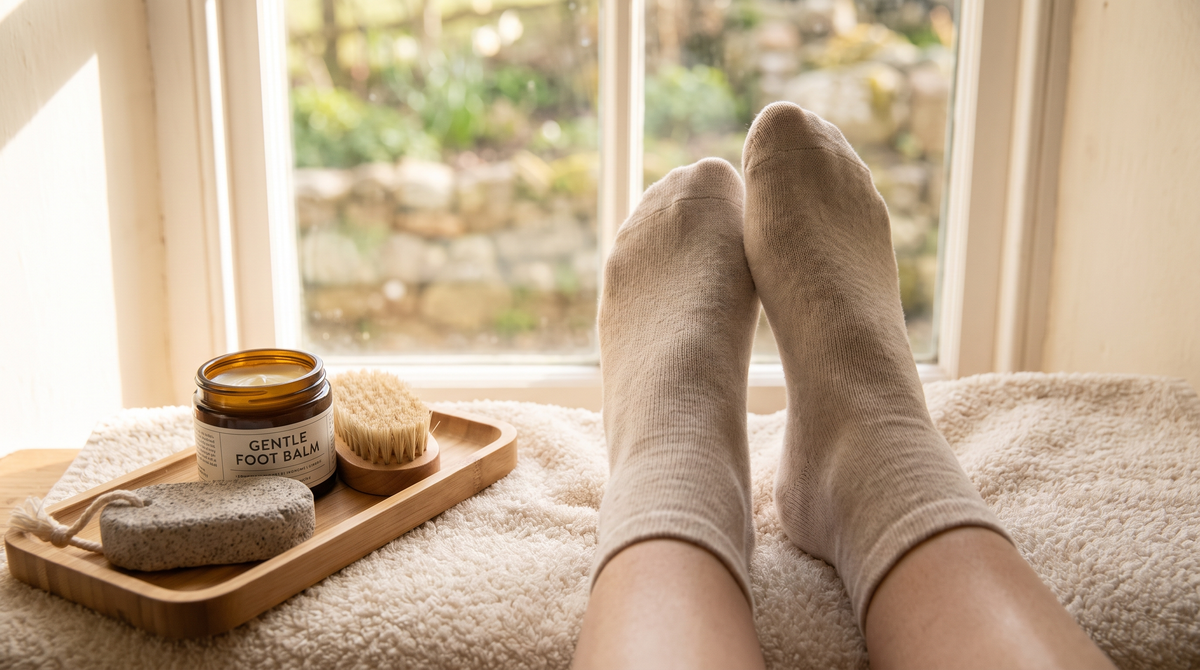
Your feet carry you through every step of your day, yet they are often the last part of the body to receive consistent attention. A practical daily foot care routine does not need to be complicated or time-consuming — a few mindful habits can make a significant difference to comfort, skin health, and overall wellbeing. Whether you are establishing a routine for the first time or refreshing an existing one, this guide walks you through everything you need to know about caring for your feet at home.
Foot health is closely connected to balance, posture, and confidence in movement. Dry, cracked, or uncomfortable feet can affect how you stand, walk, and go about daily activities. By dedicating just a few minutes each day to a simple foot care routine, you can support steady, comfortable movement and keep your feet in the best possible condition throughout the year.
At elderlycareproducts.ie, we stock a wide range of footcare products to support daily routines at home. Read on to discover practical tips, expert guidance, and product recommendations that will help you build a foot care routine that truly works.
Why Daily Foot Care Matters for Comfort and Mobility
Feet are complex structures — each one contains 26 bones, 33 joints, and over 100 muscles, tendons, and ligaments. They absorb enormous pressure throughout the day, and without regular care, minor issues can develop into more significant problems. Understanding why daily attention matters is the first step towards building a sustainable routine.
The Link Between Foot Health and Confident Movement
When feet are well cared for — properly moisturised, nails trimmed, and supported by appropriate footwear — movement feels more natural and secure. Conversely, dry or uncomfortable feet can subtly alter the way a person walks, placing unnecessary strain on ankles, knees, hips, and the lower back. A simple daily routine helps to maintain the comfort that underpins confident, steady movement.
Skin Changes and Why They Happen
The skin on the feet, particularly the heels and balls, is subject to constant friction and pressure. Over time, this leads to thickening of the skin, the formation of calluses, and in some cases, painful cracking known as fissures. Factors such as wearing open-backed footwear, insufficient moisture, and spending long periods on hard floors can all accelerate these changes. Understanding the cause helps in selecting the right products and habits to address them.
Circulation and Temperature Awareness
Feet are furthest from the heart, which means circulation naturally receives less support in the lower extremities. Keeping feet warm, massaging them gently, and staying active all help to encourage healthy blood flow. If you notice persistent coldness, numbness, or colour changes in the feet, it is always worth discussing these observations with a healthcare professional, as they can indicate circulatory changes that benefit from medical attention.
Caring for Your Feet: Building a Morning and Evening Routine
The most effective foot care routines are those that slot easily into existing daily habits. A morning and evening approach — each taking no more than five to ten minutes — provides twice-daily attention without feeling burdensome. Here is a practical framework to follow.
Morning Foot Care Steps
- Inspect your feet: Before putting on socks and shoes, take a quick visual check of both feet. Look at the soles, between the toes, and around the heels for any redness, cuts, blisters, or areas of swelling.
- Moisturise proactively: Apply a nourishing foot cream or lotion to the heels and soles, avoiding the areas between the toes where excess moisture can encourage fungal growth. Allow the cream to absorb for a minute before putting on socks.
- Choose socks carefully: Opt for breathable, well-fitting socks without tight elastic bands at the top. Natural fibres such as cotton or bamboo allow the skin to breathe throughout the day.
- Select supportive footwear: Shoes should have a firm, supportive sole, sufficient toe room, and a secure fastening. Avoid wearing the same pair of shoes two days in a row to allow them to air out fully.
Evening Foot Care Steps
- Wash feet thoroughly: Use warm (not hot) water and a mild soap to wash both feet, paying particular attention to the spaces between the toes. Avoid soaking feet for prolonged periods, as this can strip natural oils from the skin.
- Dry carefully: Pat feet dry with a soft towel, taking extra care to dry between each toe. Retained moisture between the toes is a common contributor to fungal infections.
- Apply a richer night cream: Evening is an excellent time to apply a more intensive heel cream or balm, as the skin has several hours to absorb the ingredients overnight. Consider wearing a pair of light cotton socks over the cream to enhance absorption.
- Elevate if needed: If feet feel swollen or heavy after a long day, resting with them elevated for fifteen to twenty minutes can help reduce fluid retention and restore comfort.
Nail Care: Safe and Effective Trimming Techniques
Toenail care is one of the most important — and most frequently neglected — aspects of a foot care routine. Incorrectly trimmed nails can lead to discomfort, ingrown toenails, and skin irritation. With the right tools and technique, nail care can be carried out safely and effectively at home.
How to Trim Toenails Correctly
- Trim nails after washing or bathing, when they are slightly softened and easier to cut cleanly.
- Use a dedicated toenail clipper with a wide, flat jaw — never use scissors or fingernail clippers, which are not designed for the thickness of toenails.
- Cut straight across the nail rather than following the curve of the toe. This reduces the risk of the nail edge growing into the surrounding skin.
- Leave a small amount of white nail visible at the tip — do not cut too short or too close to the skin.
- Smooth any sharp edges gently with a soft nail file, working in one direction to avoid splitting the nail.
- Check the surrounding skin for any redness or signs of irritation after trimming.
When to Seek Professional Help
Some nails — particularly those that are very thick, curved, or difficult to reach — are better cared for by a professional podiatrist. There is no need to struggle with nails that cause discomfort to trim; a podiatrist can provide safe, thorough care and offer tailored advice for your specific situation. Many GP surgeries and community health centres in Ireland can provide a referral.
Managing Dry Skin, Calluses, and Cracked Heels
Dry skin and calluses are among the most common foot concerns, and with consistent care, they are very manageable at home. The key is regular, gentle maintenance rather than occasional intensive treatment.
Choosing the Right Foot Cream
Not all moisturisers are equal when it comes to foot care. Look for creams that contain active ingredients such as urea (in concentrations of 10–25%), lactic acid, or glycerin. These ingredients work by drawing moisture into the skin and softening thickened areas over time. Apply generously to the heels and soles daily, and expect to see visible improvement within two to four weeks of consistent use.
Using a Pumice Stone or Foot File Safely
A pumice stone or foot file can be used once or twice a week to gently reduce the build-up of hardened skin on the heels and balls of the feet. Always use these tools on slightly damp skin — never on dry or broken skin — and work in gentle, circular motions. Do not over-file, as removing too much skin can cause sensitivity and discomfort. Follow up immediately with a nourishing foot cream.
Cracked Heels: Prevention and Treatment
Cracked heels occur when the thick skin around the heel becomes so dry that it splits under the pressure of walking. To prevent them, moisturise heels daily, avoid walking barefoot on hard floors, and wear shoes with a supportive back rather than open-backed styles. If cracks are already present and superficial, a specialist heel balm containing high-strength urea can help them to heal. Deep or bleeding cracks should be assessed by a podiatrist or GP.
Browse our footcare collection at elderlycareproducts.ie for a curated range of foot creams, nail care tools, and comfort accessories to support your daily routine.
Footwear and Support: Getting the Foundations Right
No foot care routine is complete without attention to footwear. The shoes and socks worn each day have a profound impact on foot health, comfort, and stability. Making informed choices about footwear is one of the simplest and most effective things you can do for your feet.
What to Look for in Supportive Footwear
- A firm, non-slip sole: Provides stability and reduces the risk of slipping on smooth or wet surfaces.
- Adequate toe box width: Toes should have room to sit naturally without being compressed. Narrow toe boxes can contribute to calluses, corns, and discomfort.
- Secure fastening: Lace-up, velcro, or buckle fastenings help to keep the foot firmly in place within the shoe, reducing slipping and rubbing.
- Low, broad heel: A low, wide heel offers more stability than a high or narrow one and distributes weight more evenly across the foot.
- Breathable upper material: Leather and mesh uppers allow airflow, helping to keep feet dry and comfortable throughout the day.
Insoles and Orthotic Support
For additional comfort, particularly if you spend long periods on your feet or experience arch discomfort, a cushioned insole can provide meaningful support. Insoles are available in a variety of densities and shapes to suit different foot types. If you have a specific concern such as flat feet, high arches, or heel pain, a podiatrist can advise on whether a custom orthotic might be beneficial.
Indoor Footwear Matters Too
Many people wear supportive shoes outdoors but switch to thin-soled slippers or walk barefoot at home. Indoor footwear is just as important as outdoor shoes — choose a well-fitting slipper with a firm, non-slip sole and good heel support rather than an open-backed or flat-soled style. This is particularly important on tiled or wooden floors, which can be slippery underfoot.
Frequently Asked Questions About Caring for Your Feet
How often should I moisturise my feet?
Ideally, feet should be moisturised at least once a day — the best time is immediately after washing and drying them in the evening. If your heels are particularly dry or cracked, applying cream twice daily (morning and evening) will produce faster results. Consistency is more important than the quantity of cream applied in any single session.
Is it safe to use a pumice stone every day?
Daily use of a pumice stone is generally not recommended, as over-exfoliation can cause the skin to become sensitive and irritated. Using a pumice stone or foot file two to three times per week is sufficient for most people. Always follow up with a moisturising foot cream after use to replenish the skin.
What is the best way to prevent fungal infections between the toes?
The most effective prevention is thorough drying between the toes after washing, combined with wearing breathable socks and rotating footwear to allow shoes to dry fully between wears. Avoid walking barefoot in communal areas such as swimming pools or changing rooms. If you notice persistent itching, redness, or scaling between the toes, speak with a pharmacist or GP, as antifungal treatment may be needed.
How short should I cut my toenails?
Toenails should be trimmed so that a small amount of white nail is still visible at the tip — roughly in line with the end of the toe. Cutting nails too short increases the risk of ingrown toenails and can cause discomfort when wearing shoes. Always cut straight across rather than rounding the corners.
Can swollen feet at the end of the day be reduced with home care?
Mild end-of-day swelling can often be relieved by elevating the feet above hip level for fifteen to twenty minutes, staying well hydrated throughout the day, and wearing well-fitting socks without tight elastic. Gentle foot and ankle exercises — such as rotating the ankles and flexing the toes — can also help to encourage circulation. Persistent or significant swelling should always be discussed with a healthcare professional, as it can have a range of underlying causes.
When should I see a podiatrist?
It is worth visiting a podiatrist if you experience persistent heel pain, recurring ingrown toenails, corns or calluses that are painful or do not respond to home care, changes in skin colour or texture, or any wound or sore on the foot that is slow to heal. Many people find an annual check-up with a podiatrist useful for maintaining long-term foot health.
Conclusion
Caring for your feet does not require an elaborate routine or specialist knowledge — it simply requires consistency, the right products, and a little daily attention. By washing, drying, moisturising, and inspecting your feet each day, trimming nails safely, and choosing supportive footwear both indoors and out, you can maintain comfortable, healthy feet that support confident movement every day.
At elderlycareproducts.ie, we have carefully selected a range of footcare products to help you build and maintain an effective daily routine at home. From foot creams and nail care tools to comfort insoles and more, browse our full personal care range and find the products that fit seamlessly into your everyday life.