
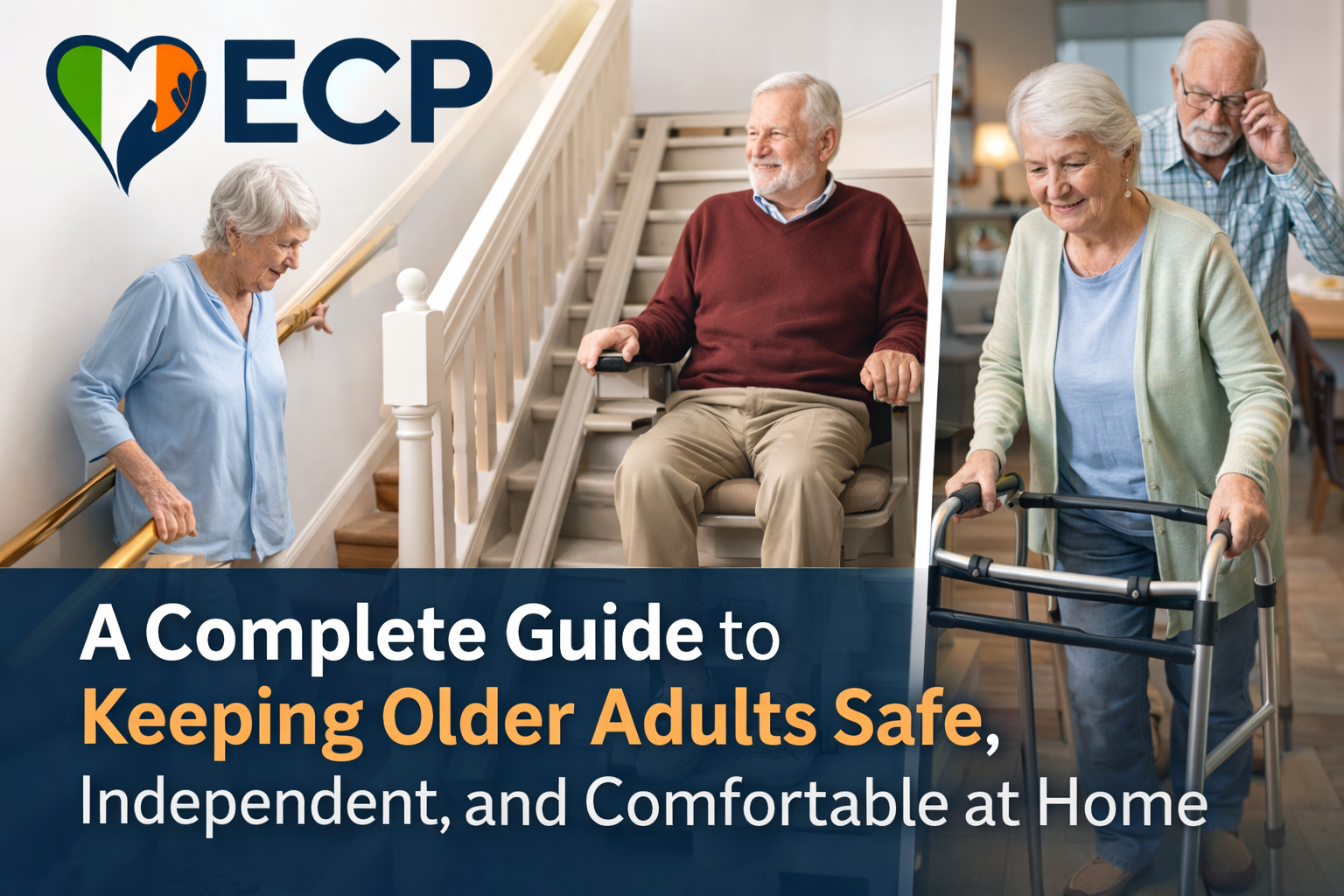
Supporting older adults to live safely and independently at home is a priority for families, carers, and healthcare professionals across Ireland. With the right equipment, home adaptations, and practical planning, many age-related risks can be significantly reduced-allowing older people to maintain dignity, confidence, and quality of life.
This guide outlines the most common safety challenges faced by older adults living at home, alongside practical, evidence-based solutions widely recommended by Irish carers, occupational therapists, and care providers.
Why Ageing at Home Matters in Ireland
In Ireland, the majority of older people strongly prefer to remain in their own homes rather than move into residential care. “Ageing in place” is also supported by HSE policy, as it:
- Preserves independence and familiarity
- Reduces pressure on nursing homes and hospitals
- Supports emotional wellbeing and autonomy
- Often lowers long-term care costs
However, living at home without the correct supports can increase the risk of falls, hospital admissions, and loss of independence. The goal is not to over-medicalise the home, but to make simple, practical adjustments that allow daily activities to be carried out safely.
Common Safety Risks for Older Adults Living at Home
Understanding the most frequent risks is the first step in preventing avoidable injuries.
Falls and Loss of Balance
Falls remain the leading cause of injury-related hospital admissions among older adults in Ireland. Contributing factors include:
- Reduced strength and balance
- Poor lighting
- Slippery floors
- Difficulty standing or walking unaided
Bathroom-Related Accidents
Bathrooms are consistently identified by Irish occupational therapists as the highest-risk area in the home, due to:
- Wet surfaces
- Limited space
- Standing from low toilets or baths
Reduced Mobility and Fatigue
Many older adults struggle with:
- Walking longer distances
- Standing for extended periods
- Getting in and out of beds or chairs
These challenges often develop gradually and are sometimes overlooked until a fall or injury occurs.
Mobility Aids That Support Independence at Home
Mobility aids are not about “giving up independence” - they are about preserving it.
Commonly Used Mobility Supports in Ireland
- Walking sticks and canes for mild balance support
- Walking frames and rollators for improved stability and confidence
- Indoor rollators for smaller living spaces
- Outdoor rollators with larger wheels for pavements and uneven ground
Irish carers often search for:
- “mobility aids for elderly at home”
- “walking frames Ireland”
- “rollators recommended by occupational therapist”
Selecting the correct mobility aid reduces fall risk and encourages continued movement, which is essential for long-term health.
Bathroom Safety: The Most Important Area to Address
If only one area of the home is adapted, Irish healthcare professionals almost universally recommend starting with the bathroom.
Essential Bathroom Safety Aids
- Grab rails near toilets, showers, and baths
- Shower stools or chairs to allow seated washing
- Raised toilet seats to reduce strain on hips and knees
- Non-slip mats inside and outside the shower
These aids are frequently recommended following HSE home assessments and are commonly installed in both private homes and care facilities.
Bedroom and Night-Time Safety Solutions
Night-time is a high-risk period for falls, particularly when getting up to use the bathroom.
Practical Bedroom Supports
- Bed rails or bed levers for safer transfers
- Motion-sensor night lights for improved visibility
- Low-glare lighting to reduce disorientation
Small interventions in the bedroom can prevent serious injuries and improve confidence when moving independently.
Daily Living Aids That Make Everyday Tasks Easier
Daily living aids are often overlooked, yet they play a crucial role in reducing fatigue and maintaining independence.
Commonly Recommended Aids
- Reachers and grabbers to avoid bending or stretching
- Dressing aids for socks, shoes, and buttons
- Perching stools for kitchen tasks
- Kettle tippers and kitchen aids for safer food preparation
Irish carers frequently search for:
- “daily living aids for elderly Ireland”
- “occupational therapy aids for home use”
These tools support dignity by enabling older adults to continue doing things for themselves.
Choosing the Right Equipment for Your Situation
Not every product suits every person. Before purchasing, consider:
- Current mobility level (walking independently vs assisted)
- Home layout (stairs, narrow doorways, bathroom access)
- Carer involvement (family or professional care support)
- Short-term recovery vs long-term support needs
When in doubt, advice from an occupational therapist, public health nurse, or GP is strongly recommended.
When to Seek Professional Advice in Ireland
Many older adults in Ireland are entitled to:
- HSE home support services
- Occupational therapy home assessments
- Assistive equipment recommendations
Professional input ensures that equipment is:
- Clinically appropriate
- Correctly installed
- Matched to changing needs over time
This is particularly important following hospital discharge or a significant change in mobility.
Supporting Safe and Independent Living at Home
With the right supports in place, most older adults can continue living safely and comfortably at home for many years. Simple adaptations—such as mobility aids, bathroom supports, and daily living equipment—can prevent falls, reduce hospital admissions, and significantly improve quality of life.
At Elderly Care Products, we specialise in carefully selected mobility and daily living aids that are widely used by Irish families, carers, and care facilities to support safe, independent living at home.
Explore our range of mobility aids, bathroom safety equipment, and daily living supports designed to meet the real-world needs of older adults across Ireland.