
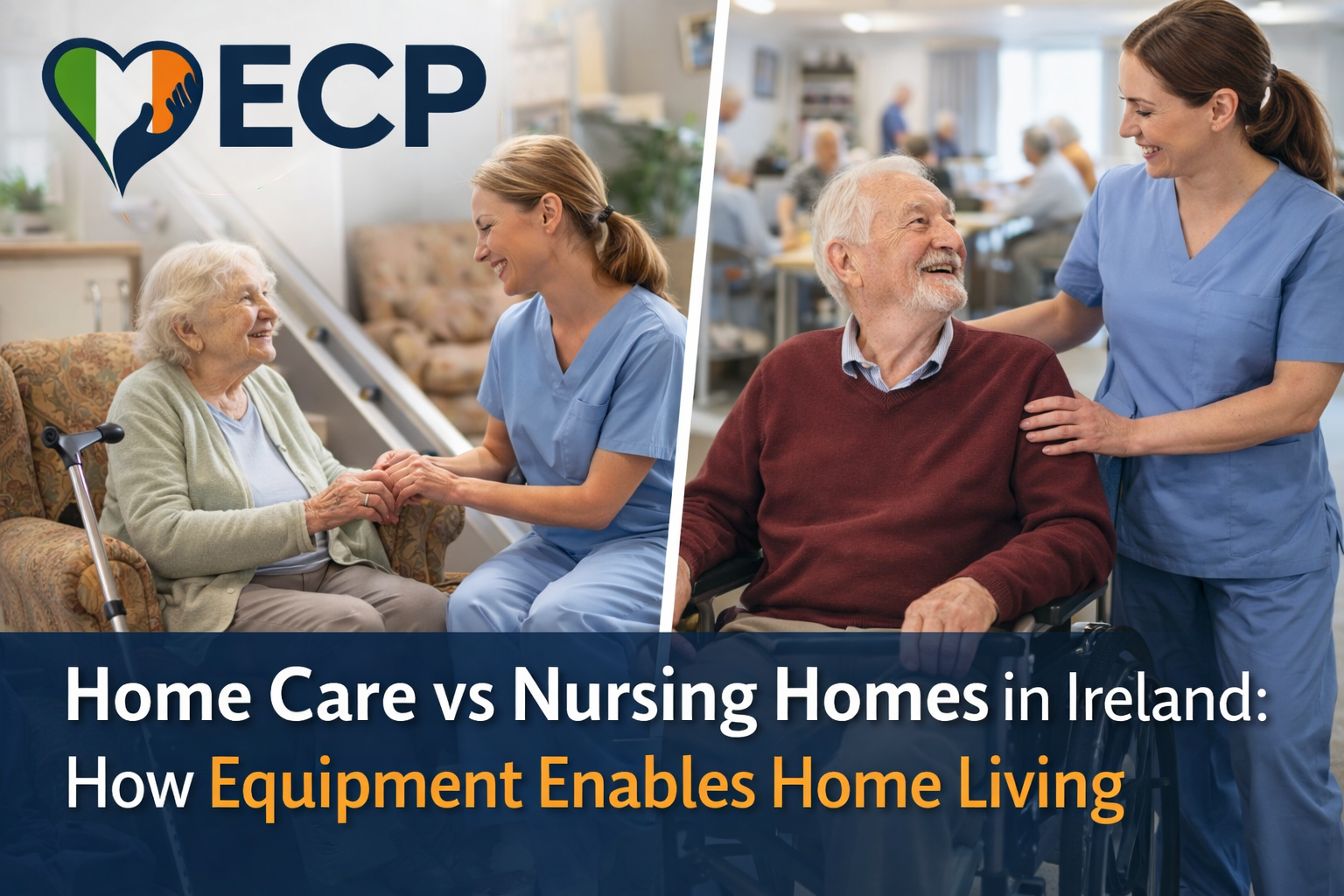
For many families in Ireland, one of the most difficult decisions they face is whether an elderly loved one should remain at home with support or move into a nursing home. While medical needs, safety, and cost all play a role, one critical factor is often underestimated: the impact of the right home care equipment.
Advances in mobility aids, bathroom safety products, and daily living equipment now allow many older adults to live safely and comfortably at home for far longer than was previously possible.
This article explores the differences between home care and nursing homes in Ireland - and how assistive equipment can make home living a viable, dignified option.
Understanding Home Care and Nursing Homes in Ireland
Home Care
Home care typically involves:
-
Living in one’s own home
-
Support from family, carers, or HSE-approved home care services
-
Use of assistive equipment to manage mobility, safety, and daily tasks
Home care can range from a few hours of help per week to full-time support.
Nursing Homes
Nursing homes provide:
-
24/7 professional care
-
Medical supervision
-
Structured environments
While nursing homes are essential for individuals with complex medical needs, many residents enter earlier than necessary due to preventable safety or mobility challenges at home.
Why Many Older Adults Prefer to Stay at Home
For most elderly people, remaining at home offers:
-
Familiar surroundings
-
Greater independence and autonomy
-
Stronger emotional wellbeing
-
Continued connection to community and family
From a family perspective, home care can also be:
-
More flexible
-
Less disruptive
-
More cost-effective when supported correctly
The key challenge is ensuring the home environment is safe, accessible, and manageable - this is where equipment plays a critical role.
How Equipment Enables Safe Home Living
1. Mobility Aids Reduce Falls and Increase Confidence
Falls are one of the leading causes of nursing home admission in Ireland. The right mobility aids can significantly reduce this risk.
Common solutions include:
-
Walking frames and rollators for stability
-
Canes for mild balance issues
-
Wheelchairs for longer distances or fatigue management
-
Bed rails and transfer aids for safer movement
When mobility improves, confidence improves and independence often follows.
2. Bathroom Safety Equipment Prevents Accidents
Bathrooms are the most hazardous area in most homes.
Simple adaptations such as:
-
Grab rails
-
Raised toilet seats
-
Shower stools and chairs
-
Non-slip mats
can dramatically reduce the risk of injury and remove the need for constant supervision during personal care.
In many cases, bathroom safety upgrades alone are enough to delay or avoid nursing home placement.
3. Adjustable Beds and Bedroom Aids Support Daily Care
Beds are central to comfort, recovery, and safe caregiving.
Equipment that supports home living includes:
-
Adjustable or profiling beds
-
Overbed tables for meals and activities
-
Bed levers and rails for easier transfers
-
Pressure-relief mattresses
These products support both the elderly person and the caregiver, reducing physical strain and improving sleep quality.
4. Daily Living Aids Preserve Independence
Loss of independence often drives the decision to move into care.
Small but effective aids can help with:
-
Dressing (sock aids, shoe horns)
-
Eating and drinking (easy-grip cutlery, non-spill cups)
-
Reaching and bending (reaching and grabbing tools)
These products allow older adults to continue performing everyday tasks with dignity.
Cost Comparison: Home Care vs Nursing Homes
While costs vary, it is important to note:
-
Nursing home care in Ireland can be expensive, even with Fair Deal support
-
Many assistive products are one-time purchases
-
Certain mobility and medical aids may qualify for VAT relief
When combined with part-time home care support, equipment can significantly reduce long-term costs while maintaining quality of life.
When Nursing Homes Are the Right Choice
It is important to be realistic. Nursing homes are often necessary when:
-
Complex medical supervision is required
-
Advanced dementia presents safety risks
-
24-hour clinical care is unavoidable
However, for many individuals, the transition happens earlier than needed simply because the home is not properly equipped.
Making Home Care Work: A Practical Approach
Families considering home care should:
-
Assess mobility and fall risk
-
Identify high-risk areas (bathroom, bedroom, stairs)
-
Introduce appropriate equipment early
-
Review needs regularly as conditions change
Proactive equipment use is far more effective than reacting after an accident.
Supporting Home Living with the Right Equipment
At Elderly Care Products, we specialise in equipment that helps older adults live safely and comfortably at home for as long as possible.
From mobility aids and bathroom safety products to adjustable beds and daily living aids, the right solutions can make home care not just possible - but sustainable.
Final Thought
Home care versus nursing home care is not always a binary decision. For many families in Ireland, the right equipment bridges the gap, delaying or even preventing the need for residential care.
With proper support, the home can remain the best place to age—safely, comfortably, and with dignity.